Loading
Related Articles





Related Articles

TrustFinance
Nov 10, 2025
16 min read
3.7K

Gold investment in 2025 has become an attractive option for Thai investors amidst global economic volatility and persistently high inflation. Gold is not only a safe-haven asset that helps preserve wealth in the long term but also generates satisfactory returns during periods of stock market fluctuations. Choosing the right gold investment method is therefore crucial to effectively achieve your financial goals.
Current global gold prices continue to be supported by several factors, including ongoing geopolitical conflicts, central banks' monetary policies worldwide that may need to ease to stimulate economies, and continuously increasing gold demand from Asian countries, especially China and India. According to the World Gold Council, global gold demand in Q3/2024 increased by 5% compared to the previous year, with central bank demand rising by 14%. Therefore, gold investment is not just a hedge against risk but also an opportunity to generate good long-term profits.

Investing in gold bars is the most straightforward and popular gold investment method among Thai investors. Gold bars come in weights ranging from 1 baht, 2 baht, 5 baht, 10 baht, up to 1 kilogram. Standard gold bars have a purity of 96.5% or higher. Buying gold bars from reputable gold shops ensures quality and allows for easy resale when cash is needed.
Gold bars can be purchased through several channels, including directly from gold shops (it's advisable to choose shops certified by the Gold Traders Association), through commercial banks offering gold trading services, or via properly licensed online gold markets. The purchase process begins by checking the daily gold price from the Gold Traders Association, comparing prices from various sources, verifying the warranty certificate and standard hallmark on the gold bar, and keeping the receipt as proof for future resale.
The advantages of investing in gold bars include tangible asset ownership, no risk of financial institution bankruptcy, the ability to store it yourself as desired, and high liquidity as it can be sold at any gold shop. The buy-sell spread is lower than that of gold ornaments, typically around 500-600 baht per baht of gold, according to data from the Gold Traders Association of Thailand as of November 10, 2025.
The disadvantages include requiring a large initial investment, starting at least 30,000-40,000 baht per baht of gold, the risk of loss or theft, storage costs if deposited with a bank or in a safe deposit box (with fees of approximately 0.5-1% of the value per year), and no returns while holding; profit is only realized when the price increases.
According to data from the Gold Traders Association, the price of gold bars in Thailand was 32,350 baht per baht of gold at the beginning of 2024 and rose to 41,950 baht by the end of October 2024, representing a return of 29.67% over 10 months. For the 2025-2026 outlook, analysts from Goldman Sachs predict gold prices will test levels of 2,700-2,800 USD per ounce, while UBS expects them to be in the range of 2,500-2,750 USD, driven by monetary policy easing and economic uncertainty.

Gold savings is a new and highly popular option among retail investors because it can be started with just a few hundred baht per month. Online gold savings systems have made investing much more convenient, allowing 24-hour trading via mobile applications and eliminating storage concerns as providers handle safekeeping.
Popular gold savings providers in Thailand, such as Hua Seng Heng Gold Saving, YLG Bullion, and Aurora Gold, operate similarly: investors can buy gold by weight or by baht value, starting from 0.01 grams or approximately 20-30 baht. The system calculates the amount of gold acquired based on the market price at the time of purchase and stores the information in an online account. Once 1 baht of gold is accumulated, it can be exchanged for physical gold bars or sold back for cash immediately.
The advantages of gold savings include being able to start with a small amount of money, making it suitable for salaried individuals with limited disposable income each month. It offers flexibility in trading, allowing transactions 24 hours a day, eliminates the need for self-storage of gold, reduces the risk of loss, and allows real-time portfolio value tracking via mobile applications. When compared to other investment forms, Gold Savings vs. Gold Mutual Funds Gold savings offers more flexibility but does not receive tax benefits like RMF/SSF funds.
The disadvantages include transaction fees of approximately 2-3%, which are higher than direct gold bar purchases, and the risk of financial problems from service providers (although most providers segregate customer gold). Additionally, exchanging for physical gold may involve minimum requirements and additional fees.
According to statistics from YLG Bullion, investors who consistently used Dollar Cost Averaging for gold savings every month since the beginning of 2024 achieved an average return of 27.3% by the end of October 2024. Recommended strategies include setting long-term savings goals of 3-5 years, saving consistently every month to average out costs, and increasing savings when prices decline. Furthermore, it is important to choose a reputable provider with proper licenses and a good security system.

Gold mutual funds are an option for investors seeking convenience and professional management by fund managers. There are several types of gold mutual funds in Thailand, including those that invest directly in gold bars, those that invest in gold mining company stocks, or those that invest in international Gold ETFs.
Gold mutual funds are divided into three main types: funds that invest directly in physical gold bars (Gold Fund), which purchase and hold gold bars and adjust their value according to gold prices; funds that invest in gold mining company stocks (Gold Mining Fund), which invest in gold production companies worldwide; and mixed gold funds (Mixed Gold Fund), which invest in both gold and gold mining stocks. Investors should study 5 Gold Mutual Funds with the Best Returns in 2025 to choose a fund that suits their risk tolerance.
The advantages include being able to start investing with a small amount of money (some funds start with just 1,000 baht), professional fund managers overseeing management, trading available on all business days through fund management companies or sales agents, tax benefits if it's an LTF or RMF fund investing in gold, and diversification of risk by investing in multiple assets.
The disadvantages include management fees of 0.5-2% per year and other fees deducted from the fund. Returns may not perfectly match gold prices due to costs and investment strategies. There is also a risk associated with the fund manager's performance, and trading is only possible on business days, unlike 24-hour trading for physical gold.
According to data from Morningstar Thailand, gold mutual funds that invest directly in gold provided an average return of 24.5% in 2024 (data as of October 31, 2024), while funds investing in gold mining stocks yielded an average return of 31.2% but with higher volatility. Fund selection should consider historical returns over at least 3-5 years, total fees, fund size, and the fund manager's capability.
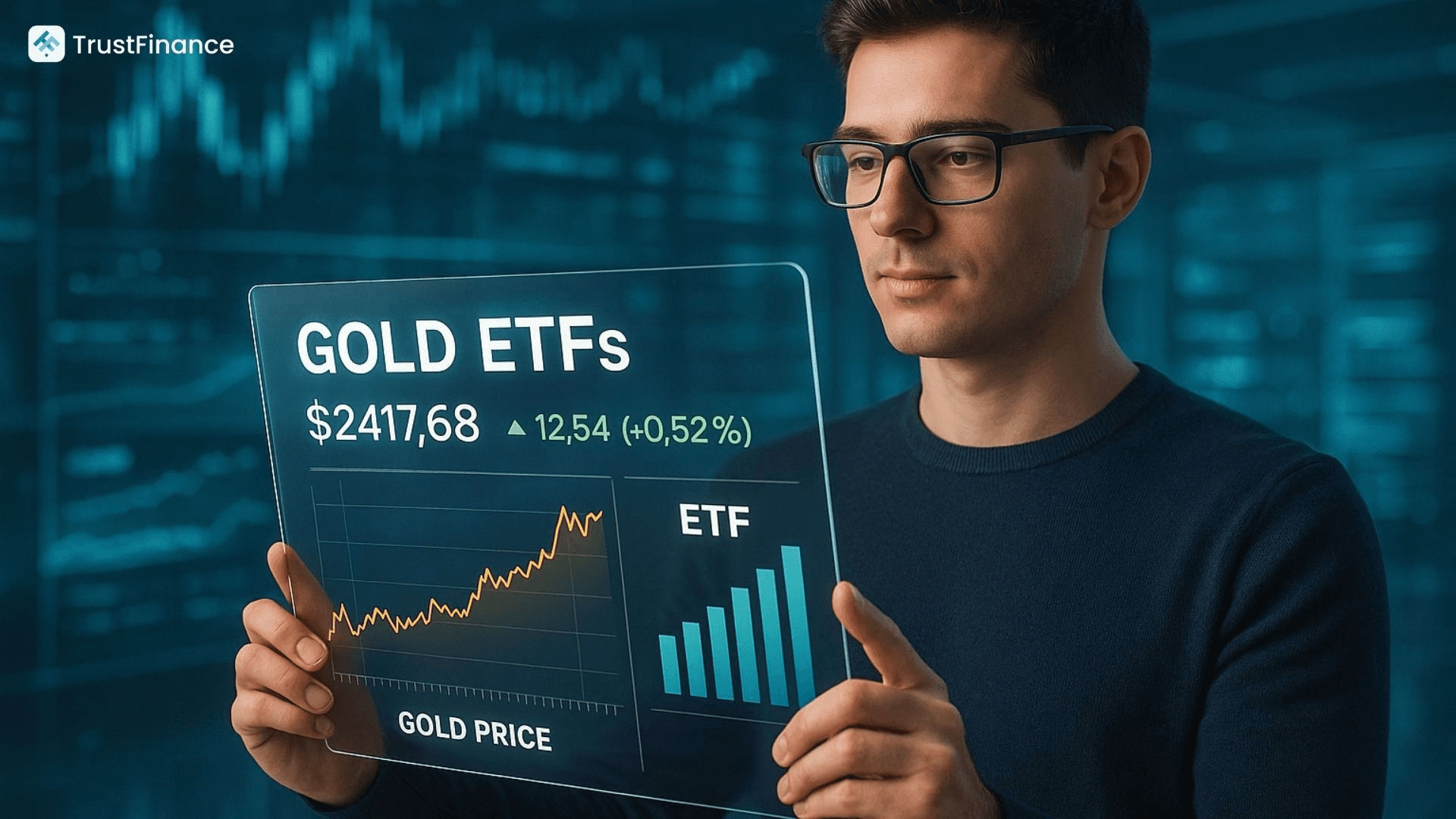
Gold ETF, or Exchange Traded Fund investing in gold, is an investment tool rapidly gaining popularity because it combines the benefits of gold bar investment with the convenience of stock trading.
Gold ETFs operate by issuing units backed by physical gold bars. When an investor buys an ETF, they effectively own gold in proportion to the units held. ETFs traded on the Thai stock exchange include OneGold ETF (1GOLD), which references domestic gold prices, and international ETFs traded through brokerage firms, such as SPDR Gold Trust (GLD) and iShares Gold Trust (IAU). Investors should Understand Gold ETFs: A New Investment Option for Gold to understand their mechanisms in detail.
The advantages of Gold ETFs include being tradable like stocks through a brokerage account, very high liquidity, transparent prices that move in real-time with gold prices, low management fees of only 0.25-0.40% per year, tradability during market hours, and the ability to use various trading techniques such as Stop Loss or Take Profit.
The disadvantages include requiring a brokerage account and knowledge of stock trading, brokerage commissions of approximately 0.15-0.25% per transaction, foreign ETFs carrying exchange rate risk, the inability for retail investors to exchange them for physical gold, and potential bid-ask spreads during volatile market periods.
According to data from the Stock Exchange of Thailand, OneGold ETF (1GOLD) yielded a return of 28.4% during the first 10 months of 2024, while SPDR Gold Trust (GLD) provided a return of 26.7% in USD (data as of October 31, 2024). Popular investment strategies include long-term holding as part of a portfolio, allocating approximately 5-15% of the total investment portfolio, or using Momentum Trading techniques during clear gold trends.

Online gold trading via Forex or CFD platforms is an investment method suitable for experienced investors who enjoy challenges. Gold trading differs entirely from buying and holding physical gold, as it focuses on profiting from short-term price fluctuations.
Popular gold trading platforms in Thailand, such as XM, Exness, and FBS, offer a variety of trading tools, including MetaTrader 4/5 with comprehensive charting and indicator systems, Copy Trading for beginners to replicate professional traders' actions, and Expert Advisors (EAs) for automated trading. Gold trading uses the symbol XAUUSD (gold against the US dollar), with leverage up to 1:500 on some brokers, allowing for potentially high profits with a small capital.
The advantages include requiring less capital due to leverage, the ability to profit from both rising and falling markets by going long or short, a market open 24 hours a day, 5 days a week, very high liquidity, low spreads, and comprehensive tools for analysis and risk management. Investors should compare gold trading vs. buying physical gold to decide which is better suited to their investment style.
The disadvantages include very high risk, especially when using high leverage, potentially leading to losses greater than the initial capital (if there is no Negative Balance Protection system). It requires more time for study and practice to trade profitably, involves swap fees or interest if positions are held overnight, and carries the risk of unreliable brokers.
According to a 2024 survey by Finance Magnates, only 15-20% of traders are profitable in the long term. Most successful traders employ Trend Following strategies combined with strict risk management, such as risking no more than 1-2% of their portfolio per trade, using a Risk-Reward Ratio of at least 1:2, and having a clear Trading Plan. Professional traders recommend starting with a demo account for at least 3-6 months and using no more than 5-10% of total investment capital for live trading.

In 2026, a significant surge in Digital Gold and Tokenized Gold on the Blockchain is expected. According to the World Gold Council, digital gold investments will grow by 35-40% annually, with new platforms utilizing Blockchain technology to record ownership, making trading more transparent and secure. Investors can easily buy fractional gold, transfer it instantly, and incur low fees.
ESG (Environmental, Social, Governance) trends will increasingly influence gold investment. Institutional investors are beginning to prioritize the origin of gold, opting to invest in sustainably produced gold that does not harm the environment and supports local communities. Gold certified as Responsible Gold Mining is expected to command a higher premium. It is anticipated that by 2026, over 30% of new gold investments will be in ESG Gold.
The launch of Central Bank Digital Currencies (CBDCs) worldwide will impact gold's role as a safe-haven asset. According to forecasts by the Bank for International Settlements, over 24 countries will implement CBDCs by 2026, which could increase demand for gold as a central bank reserve to build confidence in CBDCs. Analysts expect central banks globally to add another 500-700 tons of gold to their holdings in 2026.
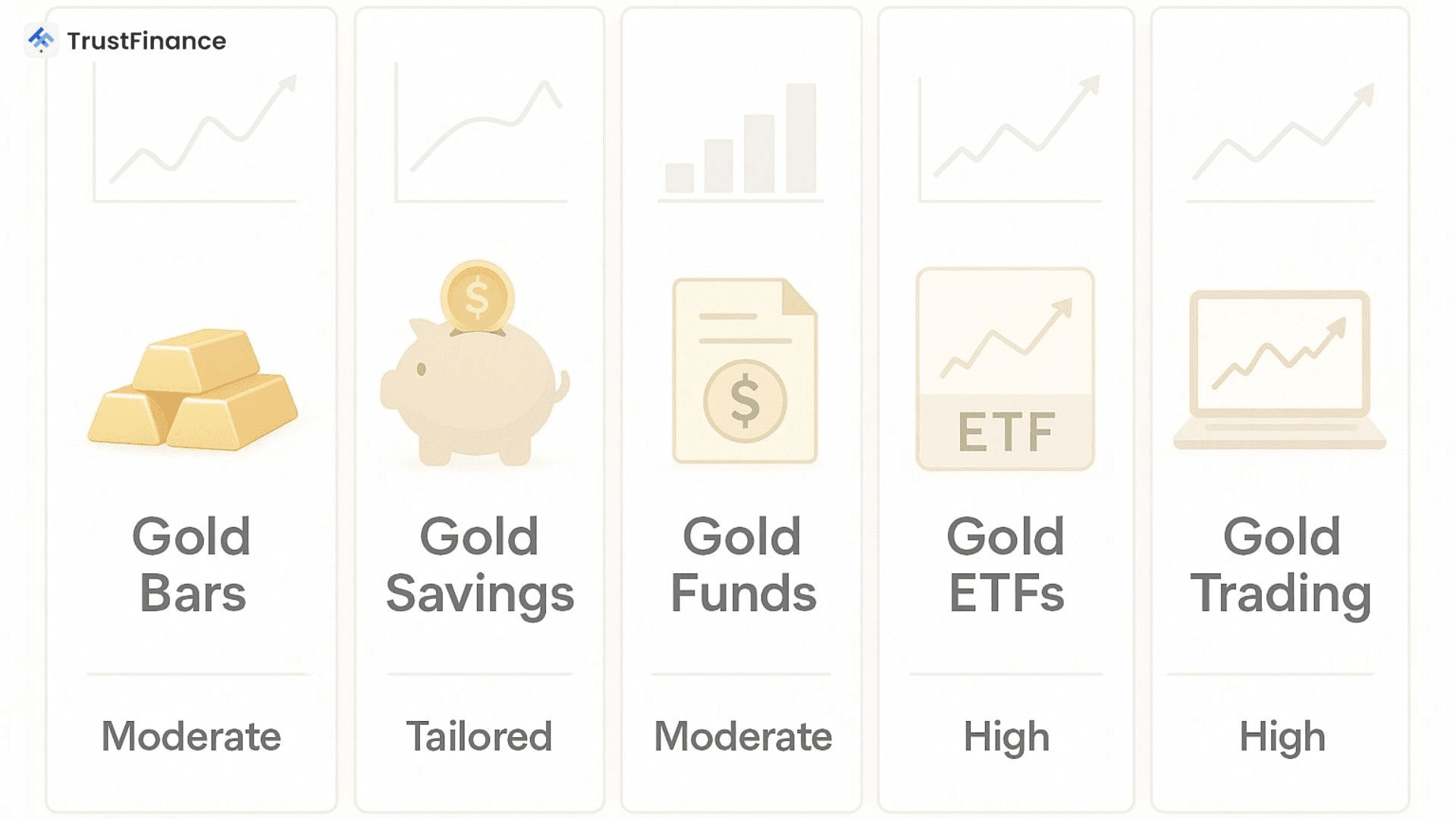
Considering all five gold investment methods in 2025, each has distinct advantages and suits different types of investors. Gold bars are ideal for investors with substantial capital who seek long-term holdings, offering returns closest to market prices. Gold savings are suitable for salaried individuals who wish to accumulate gold gradually, providing high flexibility but with moderate fees. Gold mutual funds are for those who desire convenience and professional management, along with potential tax benefits. Gold ETFs are best for investors with stock market knowledge who want high flexibility at low costs. Lastly, gold trading is exclusively for experienced investors with high risk tolerance, but it offers the greatest profit potential.
The decision to choose a gold investment method should be based on investment goals, time horizon, capital, and acceptable risk level. Diversifying investments across multiple methods can be a good option to reduce risk and increase profit opportunities, especially in 2025-2026, when the gold market still has positive factors from both demand and supply. Investors should closely monitor news and adjust their strategies to suit changing situations.
Gold Mining Funds offer the highest average returns, approximately 31%, but come with high volatility. Gold bars and Gold ETFs are suitable for investors prioritizing stability and long-term holdings.
Online gold savings can be started with just 100–500 baht per month. However, buying physical gold bars requires an initial investment of approximately 30,000–40,000 baht per baht of gold.
Gold ETFs are traded like stocks on the exchange, offering low costs, transparency, and high liquidity.
Gold savings, on the other hand, are suitable for beginners who want to accumulate gold gradually; although they have higher fees, they are easy to use and can be started immediately.
Gold prices are expected to continue their upward trend due to easing monetary policies, increasing gold demand from Asia, and the anticipated growth of Digital Gold and ESG Gold by 35–40% annually.
Sources
TrustFinance
TrustFinance helps financial companies build credibility and traders make safer choices through verified profiles, authentic reviews, and research-driven insights.

