Loading
Related Articles


24 Nov 2026
TrustFinance Reviews: How They Are Checked
Fed Rate Hikes Are Back in 2026: What a Return to Tightening Means for the Dollar, Gold, and Traders
Related Articles
24 Nov 2026
TrustFinance Reviews: How They Are Checked
Fed Rate Hikes Are Back in 2026: What a Return to Tightening Means for the Dollar, Gold, and Traders
Anonymous
Mar 15, 2023
6 min read
17

A credit card is not universally the best because it has a high reward percentage, a familiar issuer or a positive review. Compare the exact product offered to you, using the same spending period and the same repayment assumptions. This guide helps you collect the evidence before applying. It does not rank named cards or promise approval.
Will you normally pay the statement balance, sometimes carry debt, or use particular travel or reward benefits? These uses expose different costs and conditions. A reward card can still be expensive when you incur interest or fees. Interest-free purchase treatment depends on the agreement and your eligibility; a payment label or a plan to pay in full does not establish it by itself.
An advertised annual rate alone does not confirm the complete cost. Check the issuer’s definition of the measure, the applicable country, whether the rate can change, and the rate after a promotion ends. Record separately disclosed annual, reward-program and transaction charges, while checking whether a cost is already included so you do not count it twice. The CFPB credit-card APR explanation is US-specific; do not assume every country’s APR or APRC treats fees identically.
For each candidate, keep the following eight fields with the official offer or agreement. Compare the same period and currency. An unknown item remains a question to confirm, not a zero cost.
Assume one fictional 12-month period and 6000 generic money units of spending you already planned. All of that spending qualifies. Rewards are fully redeemed within this period, with one reward unit worth one usable money unit. Both reward caps and both fees are annual. Assume no interest, other charges, foreign exchange costs or taxes, and no sign-up bonus or extra spending to earn rewards. Zero interest is a model assumption, not a conclusion about a real card’s grace period.
Option 1 offers a fictional 1% reward, an annual cap of 50 and an annual fee of 0. The uncapped reward is 6000 × 1% = 60. Apply the cap first: min(60, 50) = 50. Subtract the annual fee: 50 - 0 = 50.
Option 2 offers a fictional 2% reward, an annual cap of 90 and an annual fee of 60. The uncapped reward is 6000 × 2% = 120. Apply the cap: min(120, 90) = 90. Subtract the annual fee: 90 - 60 = 30.
In these equations, min means take the lower of the reward before the cap and the annual cap. Apply that limit before subtracting the annual fee.
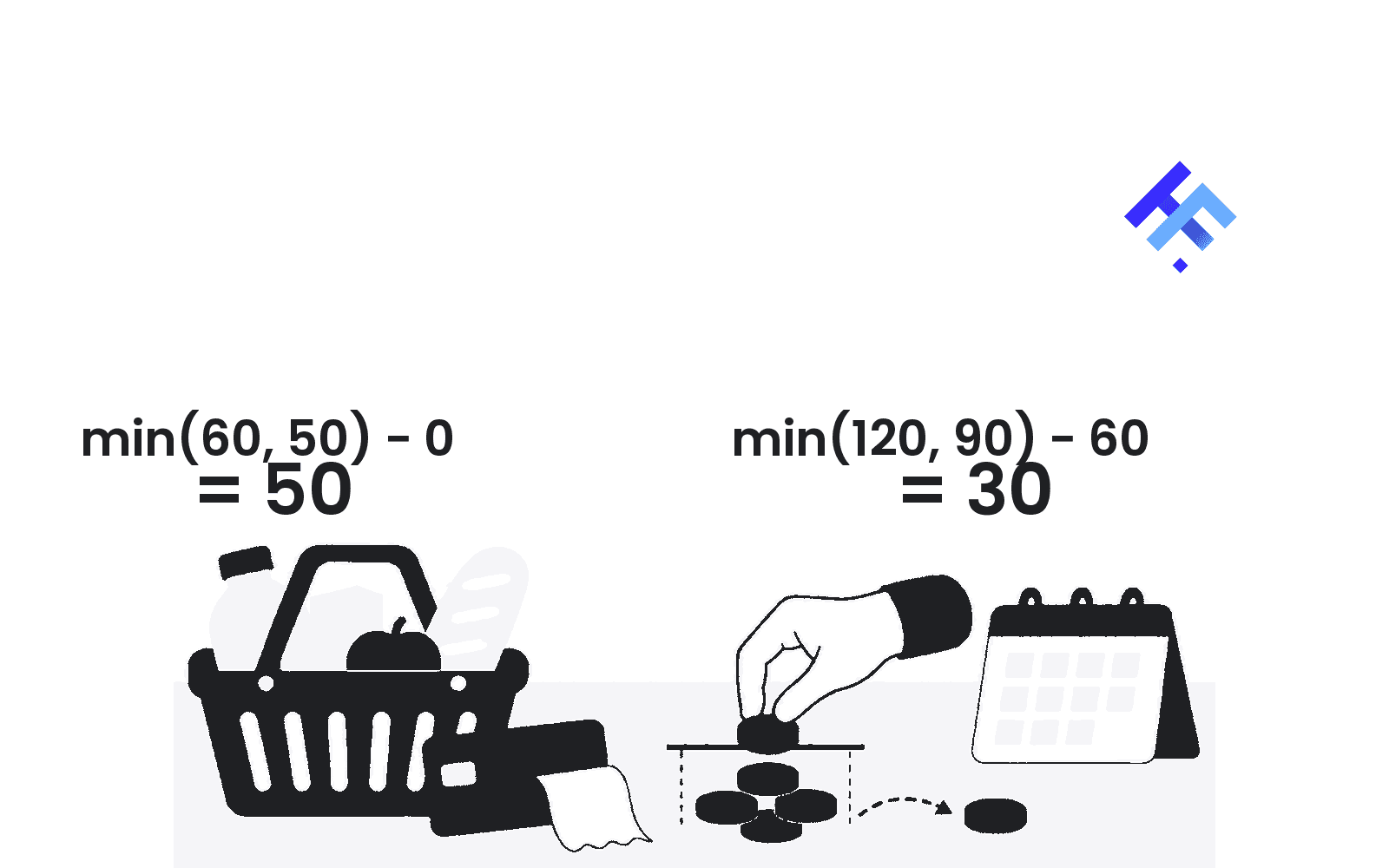
The figures 50 and 30 are reward value after the assumed annual fee only. They are not total card cost, profit or investment return. In this model, the larger headline percentage does not produce the larger reward value after that fee. This is not a recommendation to choose an actual card. Interest, other fees, ineligible spending, a different cap period or redemption limits could change the comparison.
TrustFinance™ company information and user experiences can add context about a provider. A company review or score does not replace an issuer’s card agreement, verify an individual offer, or establish that you will qualify. Check the review’s date, relevant product, legal entity and country, and consider its limitations. One person’s experience is not proof of the outcome for every customer or a complete picture of the product.
Confirm the conditions behind “free”, “up to”, introductory rewards and included insurance. Check exclusions, thresholds, expiry and the documents that govern a claim or benefit. Only apply once you understand the obligations and can afford the planned repayments. The issuer decides your application and offered terms. Keep the comparison worksheet for yourself; it is not information to submit to TrustFinance. Avoid placing sensitive payment or identity details in public reviews, and read the current privacy policies of services you use.
If you expect to carry debt, compare the borrowing conditions separately rather than treating rewards as a substitute for repayment planning. The separate guide explains how a statement balance and payments can be reconciled; it does not choose a card for you.
Read the credit-card minimum-payment and balance-ledger guide
Sources checked 9 November 2026. ASIC Moneysmart is Australian consumer education. The CFPB shopping PDF is a US educational resource printed in January 2021 and hosted on the official site; it is not a table of live offers. Their country-specific legal rules do not automatically apply elsewhere. This guide uses no real issuer tariff or nationwide card ranking. Your actual agreement, product and applicable local rules govern the result.
Anonymous