Loading
7 Daily Habits That Transform You Into a Professional Trader
T
Thanakit Sutto
Nov 12, 2025
8 min read
1.1K

Becoming a professional trader doesn't happen overnight. After speaking with dozens of successful traders, I found that they all surprisingly share similar daily habits. One professional trader who has consistently made profits for 8 years once told me, "The difference between an amateur and a professional trader isn't knowledge, but discipline and daily habits." These habits are the crucial foundation that allows them to control their emotions and make conscious decisions, which is part of 7 Trading Psychology Principles to Survive in the Market that every trader must develop.
1. Wake Up Before the Market Opens and Prepare Mentally
Every professional trader I know wakes up at least 1-2 hours before the market opens. They use this time to prepare themselves physically and mentally. One female trader who has been trading for 12 years shared that she wakes up at 6 AM every day, spending the first 30 minutes meditating and doing light exercise. She said that meditation helps her mind become calmer and more mindful, which is crucial for making trading decisions, especially during volatile market periods.
Another trader who earns millions of dollars annually has an interesting routine. He reads important economic news for the day while drinking coffee, but doesn't open his charts until he feels 100% ready. He emphasizes that trading with an unprepared mindset is the beginning of losses. This mental preparation helps prevent What is FOMO? The Psychology of Fear of Missing Out Every Trader Needs to Know which often occurs when we rush into trades without preparation.
2. Analyze the Market Using Multi-Timeframe Every Morning
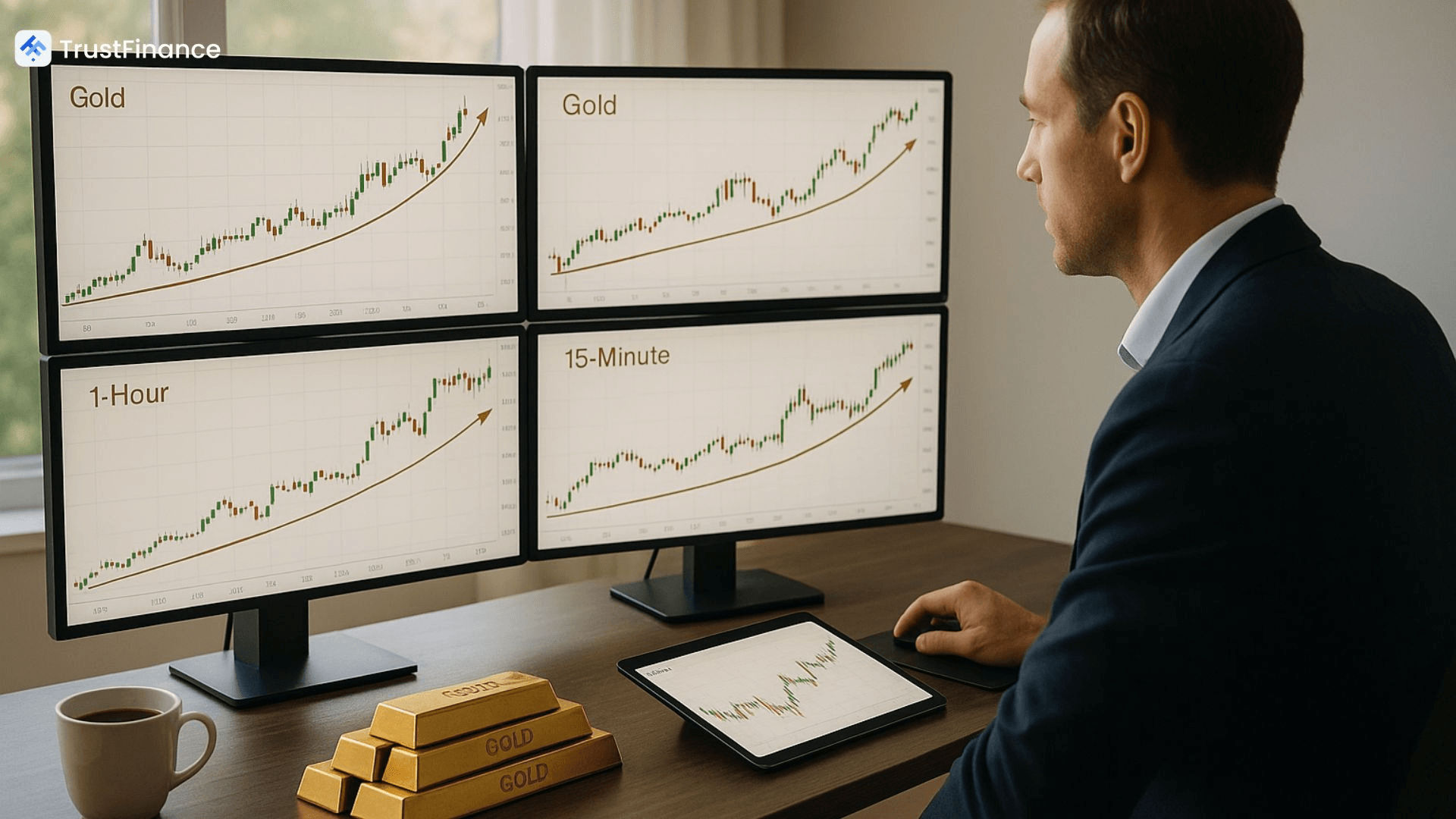
Every professional trader I've spoken with has a habit of analyzing the market using multi-timeframe analysis before starting to trade. They look at charts from Weekly, Daily, H4, H1, down to M15 to get both a big picture and a detailed view of the market. One trader explained that he spends 45 minutes to 1 hour every morning on analysis, starting with the Weekly Chart to identify major trends, then moving down to the Daily to find key support and resistance levels, and finally using H1-M15 to pinpoint precise entry points.
This detailed analysis prevents them from falling victim to false signals and boosts their confidence in trading. One professional trader mentioned that since he started doing this, his win rate increased from 40% to 65% within 3 months. Crucially, it also helps him avoid staring at charts all day because he already knows where and when to trade.
3. Document Your Trading Plan in Advance Daily
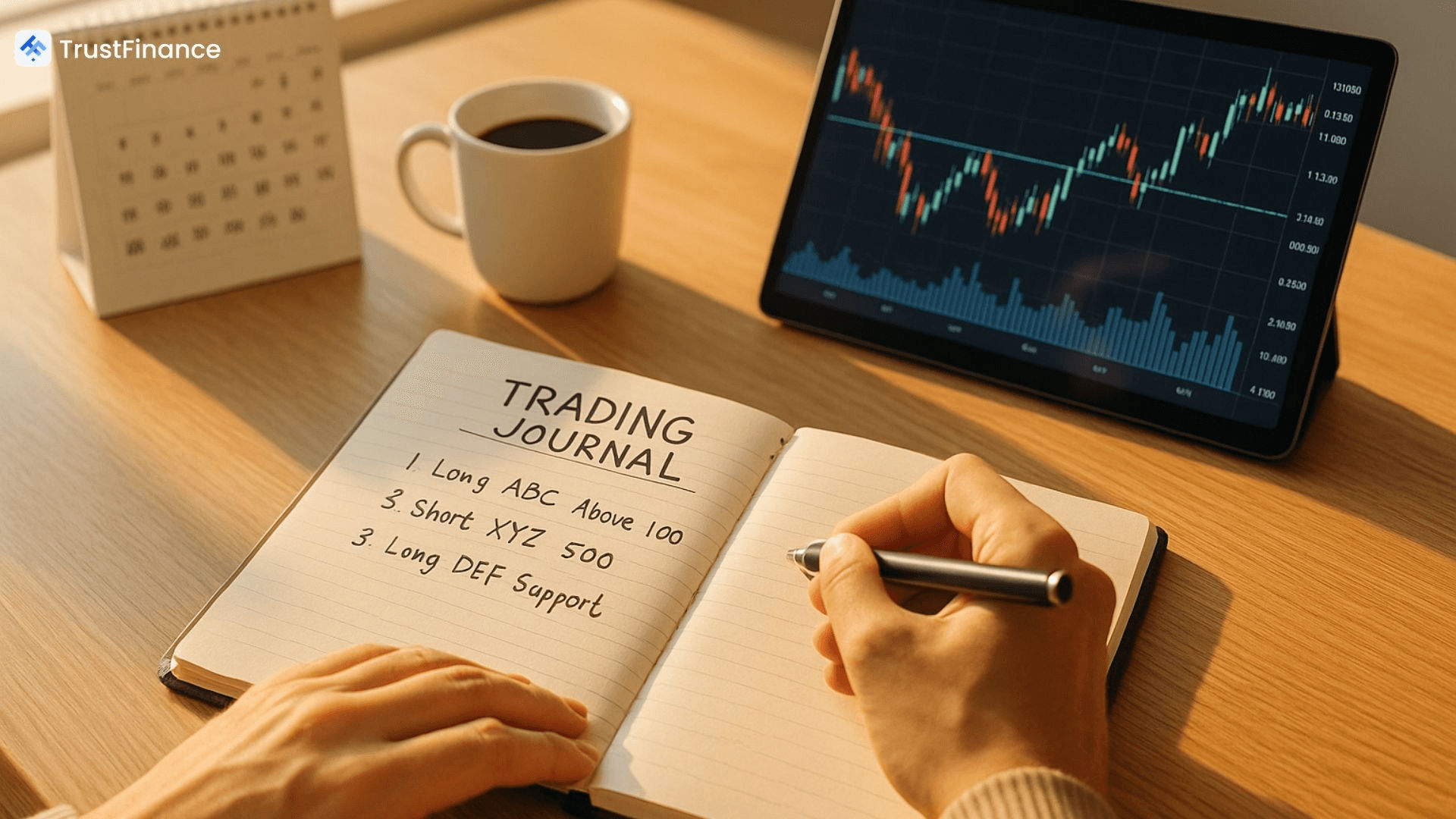
One habit that distinguishes professional traders from amateurs is planning their trades in advance and documenting them in writing. One successful trader showed me his notebook, where he clearly wrote down which pairs he would trade today, at what prices, where to set Stop Loss and Take Profit, and the reasons for entering the trade. He said that writing down the plan helps him avoid emotional trading and prevents What is Revenge Trading? Stop Retaliatory Trades Before Your Portfolio is Destroyed very effectively.
Another trader shared that he uses Excel for planning, with columns for Entry, Stop Loss, Take Profit, Risk-Reward Ratio, and Position Size. He calculates everything thoroughly before the market opens. If the market doesn't meet his predefined conditions, he won't trade at all. This habit led him to trade less but with higher quality. From trading 10-15 orders per day, he now only trades 2-3 orders, but his profits have doubled.
4. Exercise Regularly for Physical and Mental Health
Professional traders surprisingly prioritize exercise. Almost everyone I know exercises for at least 30-60 minutes daily. One trader who has been trading Forex for 15 years said that running every morning significantly helps him maintain focus and emotional stability. He explained that exercise releases endorphins, which are happiness hormones, making the mind calmer and improving decision-making.
Another female trader recounted that she used to struggle with emotional control while trading. When she lost, she'd get stressed; when she profited, she'd get overly excited. It wasn't until she started practicing yoga every evening after the market closed that, within 2 months, she noticed her emotions became significantly more stable, neither overly joyful nor overly upset about trade outcomes. This helped her see market opportunities more clearly and avoid missing out due to emotional influence.
5. Keep a Trading Journal After Every Order Closes
One of the most crucial habits of professional traders is keeping a detailed Trading Journal. They don't just record profit and loss figures, but every detail, from the reason for entry, market conditions at the time, emotions during the trade, and lessons learned. I recommend reading Unlock Profits! 5 Secret Strategies for Keeping a Trading Journal Like the Top 1% of Traders to learn the correct way to record.
One consistently profitable trader said his Journal is like a personal manual. He reviews it every weekend to identify patterns that led to profits or losses. After doing this for 3 years, he discovered that he trades best during the London Session and performs very poorly on Fridays. He therefore adjusted his strategy to focus on trading during the London Session and avoid trading on Fridays. As a result, his Profit Factor increased from 1.2 to 2.1.
6. Implement Strict Risk Management
All professional traders have strict risk management rules and adhere to them rigorously. They never risk more than 1-2% of their portfolio per trade and have a clear daily loss limit. One trader who hasn't blown his account in 10 years said he lives by the principle: "Capital Preservation First, Profit Second." He stops trading immediately if he loses 3% in a day, no matter how good an opportunity he sees.
This habit is crucial for How to Trade Forex Without Blowing Your Account. Another professional trader recounted that he blew his account twice during his first 5 years before learning that risk management is more important than finding an accurate trading system. He said, "A 90% accurate system is meaningless if you go all-in and encounter the 10% where it fails." Now, he uses a 1% risk rule per trade and never trades more than 3 orders simultaneously.

7. Get Enough Rest and Have a Life Outside of Trading
The last habit, often overlooked but extremely important, is getting enough rest and having other activities outside of trading. Every successful professional trader I know sleeps at least 7-8 hours per night. They understand that a fatigued brain makes poor decisions. One trader recounted that he once tried to trade 24 hours a day, resulting in heavy losses due to poor decisions made out of exhaustion.
Furthermore, having hobbies or other activities helps the mind relax and prevents excessive preoccupation with trading. One professional trader enjoys playing guitar, another loves cooking, and yet another enjoys gardening. They all agreed that these activities allow their brains to rest and foster greater creativity, which positively impacts their trading without them even realizing it. One trader said, "My best trading ideas often come to me when I'm not sitting in front of the screen."
Conclusion
Becoming a professional trader isn't solely about having an accurate trading system, but rather about cultivating good daily habits and consistently repeating them until they become an integral part of life. All 7 habits mentioned here are derived from the real experiences of successful traders. They all emphasize that trading success doesn't come from intelligence or luck, but from discipline and continuous self-improvement. Start building these habits today, and you will undoubtedly see a change in your trading results.
Sources
- Investopedia – 2% Rule in Investing: Manage Risk and Limit Losses with …
Harvard Business Review – What Does It Really Take to Build a New Habit? - Investopedia – What Is the Daily Routine of a Swing Trader?
- Investopedia – Risk Management Techniques for Active Traders
Written by
T
Thanakit Sutto
Finance content writer with a passion for investing, believes that good knowledge empowers smart decisions.
Tags:
Best pick of the Week
Related Articles