Loading
Related Articles


10 Sep 2026
What is Forex Leverage? How risky is it?
Related Articles
10 Sep 2026
What is Forex Leverage? How risky is it?
Thanakit Sutto
11月 14, 2025
7 min read
286
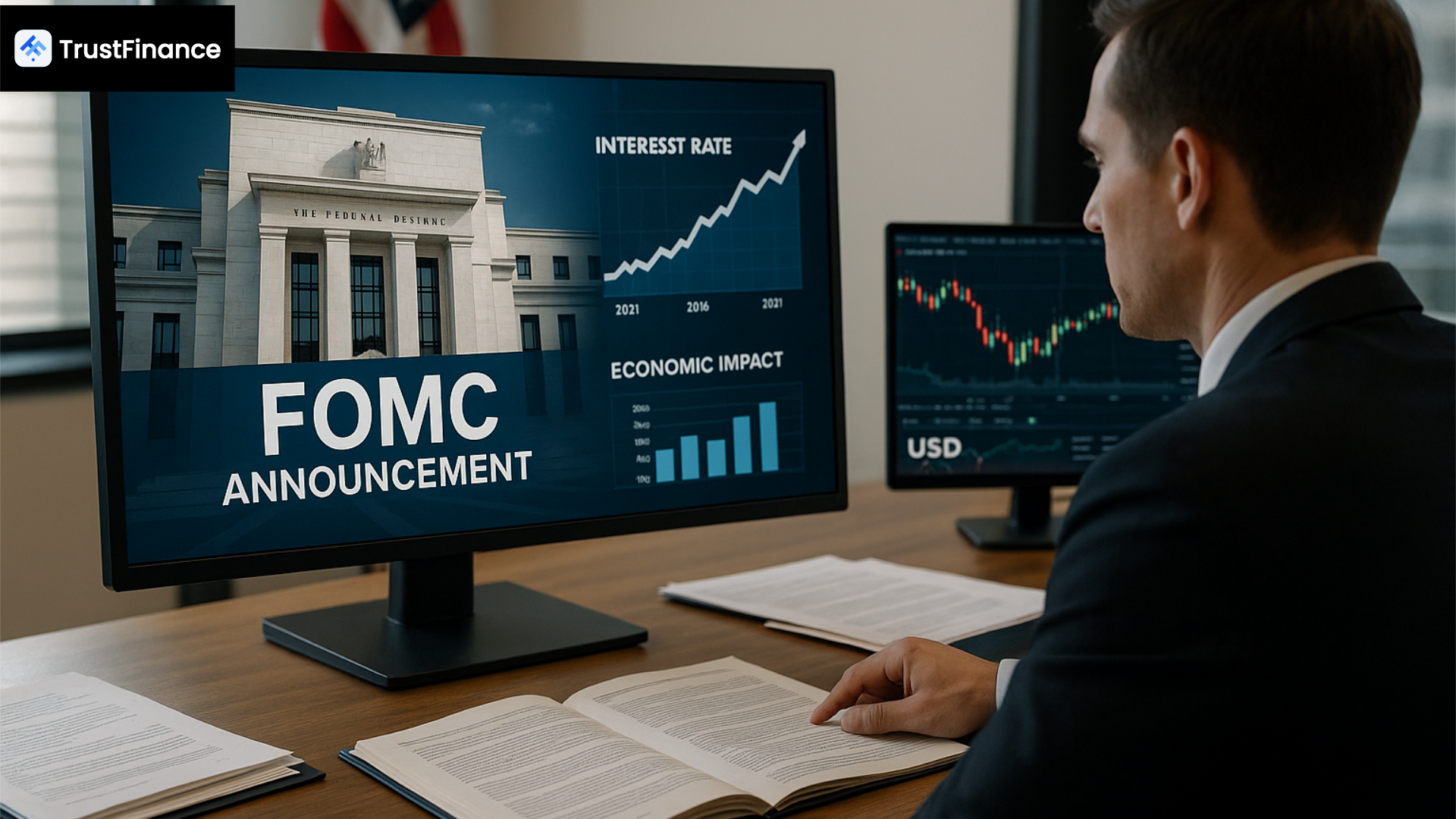
If you are a news trader, understanding the role of FOMC is one of the most crucial fundamentals. Because every time the Fed meets, financial markets worldwide, from Forex, gold, stocks, to crypto, eagerly watch for signals from the Federal Reserve regarding the future economy. If you are not yet familiar with the overall picture of the entire Fundamental system, we recommend reading the main article first to understand the complete structure of news analysis → Fundamental for News Trading: Easy to Understand in 5 Minutes
FOMC (Federal Open Market Committee) is the monetary policy committee of the United States central bank, or the Federal Reserve. It is responsible for setting the direction of the country's monetary policy, such as:
Because the U.S. is the world's largest economy, FOMC decisions directly impact the USD, the world's primary currency, and also create ripple effects across all global markets.
Many might think the Fed only has a chairman, but in reality, the FOMC consists of 12 committee members, comprising:
This means 12 individuals have the power to shape the global economy each year. What each person says, or which way the votes lean, all impacts investor interpretation.
What traders follow most closely in every meeting is:
Interest rates are the primary factor determining global currency directions. If the Fed raises interest rates, the USD typically strengthens, while gold tends to weaken due to higher holding costs.
Every quarter, the FOMC releases the “dot plot” showing each committee member's interest rate projections. This information is closely watched by the market as it indicates how the Fed views inflation and the economy.
Sometimes, interest rates “don't change,” but the market swings wildly due to the Fed Chair's remarks, such as:
Just one sentence can instantly make the USD strengthen or weaken.
Because the Fed is the most influential central bank in the world, its interest rate decisions impact:
When the Fed speaks, the whole world listens.
Interest rate direction is determined by “inflation,” and inflation is measured by CPI, which is one of the most important variables for the FOMC. To understand the basics of inflation, read more at → What is CPI? Why Inflation Makes Markets Volatile
The Fed will look at:
If CPI remains consistently high, the Fed is highly likely to raise interest rates.
Besides inflation, the Fed also monitors “economic activity,” especially the PMI figures, which indicate future trends in the manufacturing and services sectors. If PMI remains below 50 for several consecutive months, the Fed might view the economy as slowing down, with increased risks, which also impacts interest rate decisions. Read more at → What is PMI? The Indicator Pointing to the Economic Future
Whether the U.S. economy is strong, the Fed can tell from the labor market through the Non Farm Payroll (NFP) figures. If NFP is very strong, the Fed might be confident in continuing to raise interest rates without harming the economy. However, if NFP starts to decline, it could signal the Fed to slow down its tightening. More details → What is Non-Farm? Why Traders Must Watch It
Because everyone is looking for answers to:
Even if the Fed doesn't adjust interest rates sometimes, just the “statement” is enough to cause violent market movements.
FOMC meetings are not just about interest rate announcements; they represent the “direction of the global economy” reflected through the Federal Reserve's statements. If you understand what the Fed is thinking, what it intends to do, and what it is concerned about, you will have a trading advantage over most traders who only focus on numbers but don't read the underlying context. Studying CPI, PMI, and Non-Farm news together will give you a clearer overall market picture and more accurate directional analysis.
Sources
Thanakit Sutto
Finance content writer with a passion for investing, believes that good knowledge empowers smart decisions.


