Loading
What is RWA? Tokenized Assets That Are Transforming Investment in Thailand

TrustFinance
Dec 17, 2025
5 min read
1.3K

Why Tokenized Assets Are Changing Investment in Thailand
The terms RWA (Real-World Assets) and Tokenized Assets are no longer just new concepts in the financial industry. Instead, they are being increasingly experimented with and put into real-world use across investment platforms, financial institutions, and the issuance of new financial products.
The question many investors and organizations are seeking answers to is What is RWA and why Tokenized Assets have become one of the most closely watched investment structures this year.
What is RWA
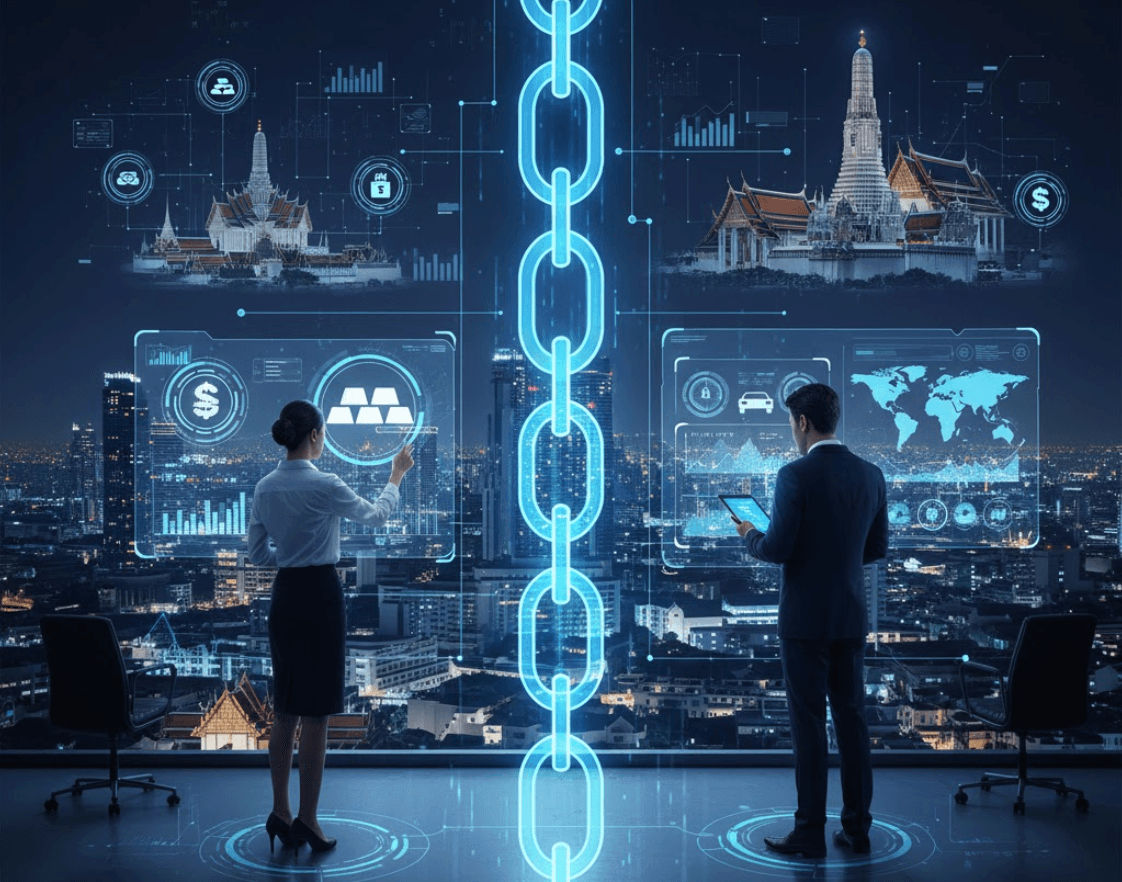
RWA (Real-World Assets) refers to assets that exist in the physical world or traditional financial markets, such as:
- Real estate
- Gold
- Debentures and debt instruments
- Infrastructure assets
When these assets are linked with digital technology, especially blockchain, what emerges is called
Tokenized Real-World Assets or Tokenized Assets
Simply put,
Tokenization is the conversion of “rights to hold or receive benefits from real assets”
into digital tokens that can be held, transferred, and traded.
How Tokenized Assets Work in Practice
In practice, Tokenized Assets do not mean that real assets are entirely converted into digital form,
but rather the division of an asset's value or rights into smaller units (Fractional Ownership).
Examples found in the market towards the end of 2025 include:
- Buildings or real estate projects are divided into numerous tokens.
- Investors can hold only a fraction instead of purchasing the entire property.
- Ownership and transfer of rights are recorded through a traceable digital system.
This structure makes assets that once required large capital more accessible.
Examples of RWA Already in Real-World Use
1. Real Estate Investment via Tokens
Real estate is one of the most highly anticipated RWAs in 2025,
as it can address several traditional limitations of the real estate market, such as:
- Lower initial investment
- Increased liquidity in holdings
- Investors do not need to manage the assets themselves
Investing in real estate via tokens allows investors to hold rights to income or appreciation of real estate through digital tokens instead of direct ownership.
2. Gold in Tokenized Form
Gold continues to be seen as a hedge asset during volatile economic conditions.
Tokenizing gold helps to:
- Facilitate easier trading
- Reduce storage limitations
- Allow for fractional ownership
Gold tokens are typically backed by physical gold held in vaults according to standards.
3. Private Debentures and Debt Instruments
In 2025, private debentures are increasingly being experimented with for issuance in digital form.
Key advantages include:
- Reduced issuance and management costs
- Increased transparency in ownership
- Greater accessibility for retail investors
Why Tokenized Assets Are Highly Discussed in Thailand in 2025
Key reasons why Tokenized Assets Thailand has become a major topic this year include:
- Investors are seeking alternatives beyond stocks and mutual funds.
- Blockchain technology is becoming more stable and widely adopted in practice.
- Businesses and regulatory bodies are beginning to develop approaches suitable for the Thai context.
Although adoption is still in its early stages, the market direction has become clearer than in previous years.
Opportunities for RWA from an Investor's Perspective
In terms of opportunities, RWA opens doors to:
- Access high-value assets with lower investment capital
- Diversify investment portfolios
- Increase options during volatile traditional financial markets
However, these opportunities can only materialize if the structure is transparent and verifiable.
Risks to Consider Carefully
While RWA is gaining more attention in 2025, there are still risks that investors should not overlook, such as:
- Clarity in legal and regulatory frameworks
- Credibility of token issuers
- Liquidity in the secondary market
- Disclosure of underlying asset information
Understanding these risks is crucial before making investment decisions.
What Investors Should Check Before Investing in Tokenized Assets
Before investing, investors should consider at least 4 key points:
- The legal structure of the token
- How credible is the company or platform issuing the token?
- Is there sufficient disclosure of information for the underlying asset?
- How transparent are the trading and transfer of rights systems?
In this context, financial company credibility data platforms like TrustFinance play a role in helping users access comprehensive information for their consideration.
RWA in the Broader Picture of Wealth 5.0
By the end of 2025, Tokenized Assets is not just a new product,
but rather a part of the evolving financial structure moving towards Wealth 5.0
which emphasizes accessibility, transparency, and responsible use of technology.
👉 Read the full overview in the article Wealth 5.0: How Tokenized Assets and AI Are Transforming Investment
Written by
TrustFinance
TrustFinance helps financial companies build credibility and traders make safer choices through verified profiles, authentic reviews, and research-driven insights.


