Loading
Forex reopening gaps after weekends: limits of an ordinary stop loss

TrustFinance Research Team
Oct 12, 2026
5 min read
7

An ordinary stop loss does not promise that a Forex position will close at its chosen level after a weekend or holiday. A reopening quote can cross the trigger before execution becomes possible. The useful question is which contract remains open, which price triggers its order, and what happens when trading resumes.
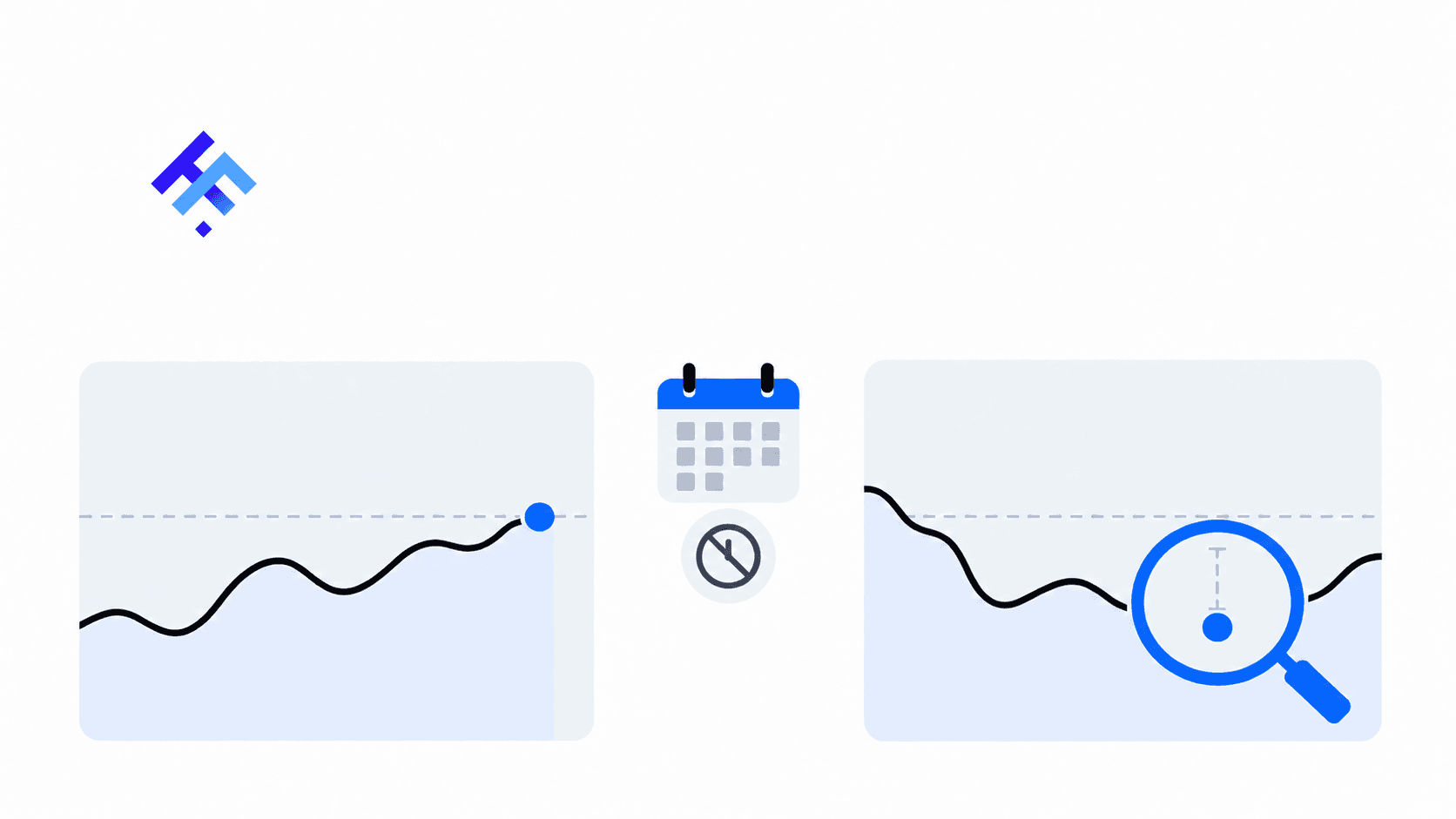
Follow the position from closure to reopening
Start with the last tradable quote for the actual instrument. During closed hours, news and economic expectations can change while that account supplies no executable quotes. A flat or empty chart does not mean the underlying economic value has stopped changing. An order accepted or amended during closure is not proof that the position can be closed then.
OANDA Corporation documents this distinction: customers can modify certain orders while its markets are closed, but cannot open or close positions. Its reopening warning describes gaps and execution at prevailing rates. These are terms for that division, not a universal Forex timetable. Check the actual entity, instrument, holiday schedule, time zone and daylight-saving changes.
Also check the contract name. IG International describes some weekend FX markets as separate from weekday equivalents. Seeing a weekend quote elsewhere therefore does not establish that your existing weekday position can close against it. Eligibility, linkage and any rollover depend on the actual product terms.
An illustrative EUR/USD gap calculation
Assume a long EUR/USD position of EUR 10,000 in a USD account. Entry is at ask 1.1000, the last tradable bid is 1.0980, the ordinary stop is 1.0950, and the assumed reopening bid and fill are both 1.0900. For this example only, the sell stop triggers on bid reaching or crossing its level. One pip is 0.0001, worth USD 1 at this position size.
| Measurement | Calculation | Illustrative result |
|---|---|---|
| Last bid to reopening bid gap | (1.0980 - 1.0900) / 0.0001 | 80 pip |
| Loss if filled at the stop level | (1.1000 - 1.0950) × 10,000 | USD 50 (50 pip) |
| Loss at the assumed execution price | (1.1000 - 1.0900) × 10,000 | USD 100 (100 pip) |
| Extra loss versus a stop-level fill | USD 100 - USD 50 | USD 50 (50 pip) |
The bid-to-bid gap is 80 pips. The stop-to-fill difference is 50 pips, and the total assumed trading loss is USD 100. These are three different measurements. Entry ask to exit bid already includes the effect of those two price sides; do not add an invented spread charge again.
The assumed fill is not a promise of access to the first quote. Available liquidity, processing and order conditions can produce another price or prevent execution. This illustration assumes no earlier margin closeout and excludes commission, financing, currency conversion and taxes. Margin liquidation is a separate account mechanism; an ordinary stop does not override it.
Compare the contractual limits, not just order names
| Order or contract | What a gap can expose |
|---|---|
| Ordinary stop | The trigger activates a closing instruction, but the execution price can be worse. Do not equate a touched level with a completed fill. |
| Stop-limit, if offered | Triggering submits a limit instruction. The price restriction can leave it unfilled after a gap, so the exposure may remain. OANDA Asia Pacific explains the concept but lists this type as unavailable on its listed platforms. |
| Specifically contracted guaranteed stop | Some eligible products take the slippage risk under a distinct contract with premium and restrictions. IG UK documents such terms. Verify actual eligibility, instrument, platform, distance rules and cost; the label does not guarantee overall portfolio safety. |
A closure and reopening checklist
- Identify the exact entity, instrument and weekday or weekend contract. Record its closure and reopening schedule rather than borrowing another provider’s hours.
- Check whether order entry, modification, cancellation and position closure are each possible during closed hours. They are different permissions.
- Confirm trigger reference and chart basis: bid, ask, mid or a volume-weighted price may differ. Record the order status and execution report, not just a chart screenshot.
- Read liquidity, expiry, rejection and partial-fill conditions. If an alternative order is available, check its own limitations and fees.
- Check margin-closeout rules separately. Leverage magnifies exposure; a calculated loss at the stop level is not a maximum-loss guarantee.
Frequently asked questions
Does an 80-pip gap mean this trade loses 80 pips?
No. The gap compares the last bid with the assumed reopening bid. This trade started at ask 1.1000 and is assumed to exit at bid 1.0900, giving 100 pips of trading loss before excluded costs.
Can I replace an ordinary stop with a stop-limit to eliminate the problem?
Only if the actual contract supports that order, and it exchanges execution-price uncertainty for possible non-execution. A position that remains open can continue to gain or lose value. It is not a universal solution.
Related reading
Explore more educational guides on TrustFinance Blog.
This is general education, not a recommendation to hold, close, widen a stop or add funds. Provider examples describe specific documentation; legal rights and protection depend on your entity, product and jurisdiction. No return, execution or maximum-loss guarantee is made.
Primary sources
Sources checked on 12 October 2026. Provider-specific conditions must be checked again for the actual account.
Written by
TrustFinance Research Team
Official TrustFinance research and editorial team, sharing insights, analysis, and best practices to help financial companies and traders build transparency, credibility, and growth.


