Loading
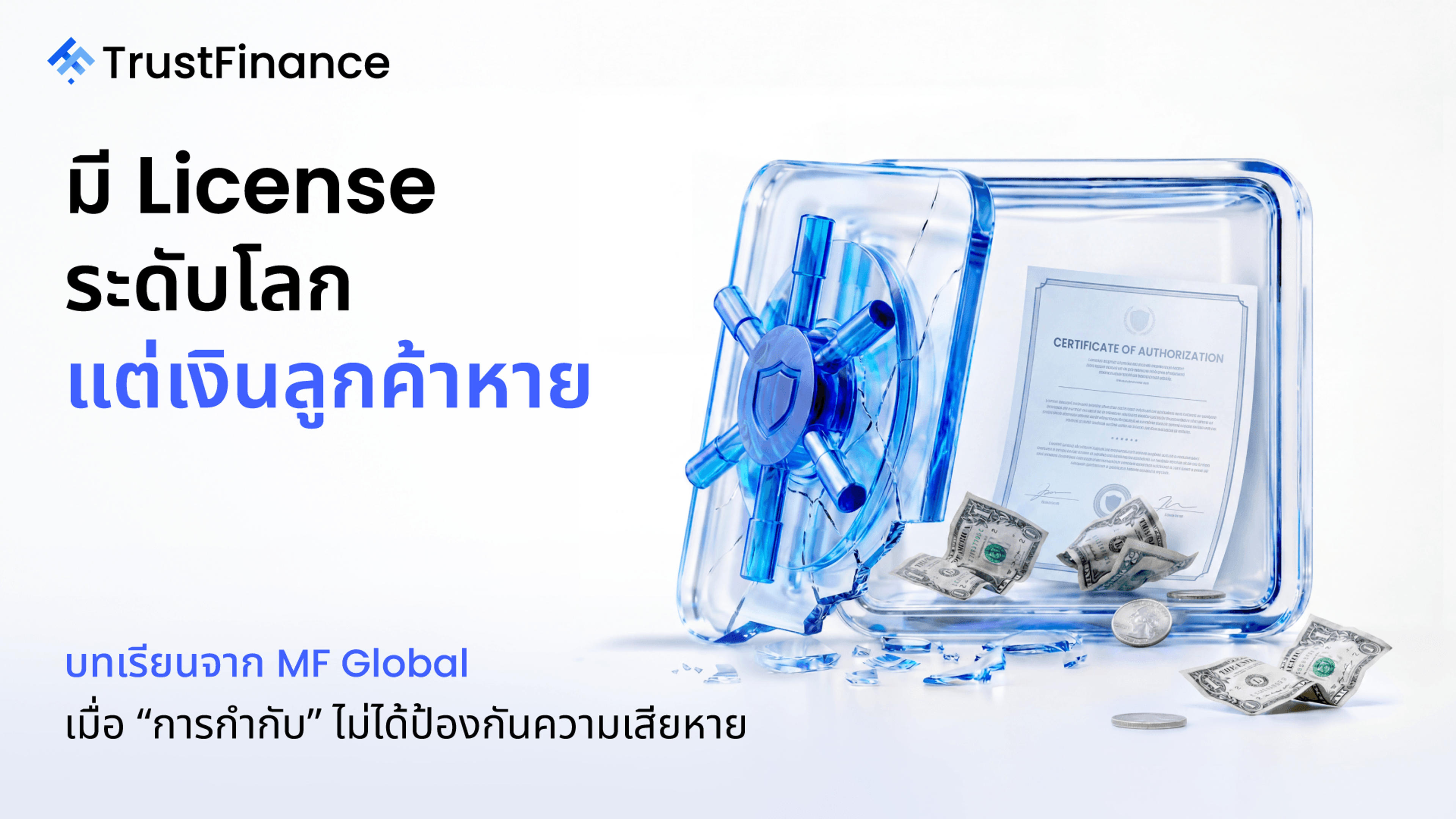
Regulated isn't as safe as you think: A common misconception in the investment world.

TrustFinance
Mar 25, 2026
7 min read
339

In the world of investment, the terms “Regulated”, “Licensed” or “Registered” are often interpreted as a signpost for safety. But many investors are mistaken. Many investors believe that if a company is under the supervision of a government agency, they will have low risk and can be trusted.
However, there is a misunderstanding about regulation that should be clarified. Because being licensed or regulated does not always mean that a company is safe. Even if a company is regulated or licensed, it is not always certain that they will be safe and may pose risks to your financial outcomes.
This issue is often kept confidential and not clearly disclosed to investors, which may include financial problems, non-transparent management, or the concealment of important information regarding the company's stability.
But the history of the financial industry tells us that this understanding is not always correct. Many regulated companies still face financial problems or cause damage to investors.
Many significant events in the financial market have occurred with companies within the regulatory system, demonstrating that regulation is not a sign of investment safety. The risks of regulated companies can be equal to those of unregulated companies in some cases, as has happened in the past.
What Does Regulation Actually Do?
Regulatory bodies, such as:
- U.S. Securities and Exchange Commission (SEC)
- Financial Conduct Authority (FCA) of the United Kingdom
- Australian Securities and Investments Commission (ASIC)
are responsible for setting rules and overseeing various procedures in the operations of financial companies.
But
the SEC states that registration with them does not mean they “endorse” or “approve” any company or investment.
The SEC also tells us that claiming that
a company has been “approved” or “endorsed” by the SEC
is a misleading claim.
Therefore, having a license merely means that the company must comply with certain rules; it does not indicate that the company is safe from risk.
Real-World Examples Reflecting That Regulated Does Not Mean Safe
MF Global (2011)
MF Global was a commodity brokerage firm operating in the U.S. futures market.
After the company entered bankruptcy proceedings in 2011 due to financial problems arising from risk management errors and high-risk investments in European government bonds, a report by the U.S. House Committee on Financial Services indicated that approximately $1.6 billion in client funds were missing, severely impacting investor confidence and prompting regulatory bodies to become stricter.
This event became one of the significant disputes in the derivatives market and led to a re-examination of rules regarding client fund protection in the futures market.
Peregrine Financial Group (PFGBest)
Peregrine Financial Group was a company registered as a
registered futures commission merchant in 2012 during an audit by the National Futures Association (NFA).
According to the Commodity Futures Trading Commission (CFTC), the company claimed to have approximately $220 million in client funds, but it was ultimately found to have only $5.1 million, indicating that the company had problems with financial data falsification, and this issue had occurred multiple times.
This event reflects significant problems related to
- financial data falsification
- failure of internal control systems
WorldSpreads (United Kingdom)
WorldSpreads was a spread betting company in the United Kingdom.
In 2012, the company was placed into
Special Administration
According to the Financial Conduct Authority (FCA), approximately £13 million in client funds were missing, and about 15,000 clients had to deal with consequences such as investment losses and delays in receiving refunds.
This event led some clients to seek compensation through the
Financial Services Compensation Scheme (FSCS)
SVS Securities
SVS Securities was a company providing investment management services and was regulated by the FCA.
According to the FCA report, 879 clients invested a total of £69.1 million in high-risk and illiquid instruments, which are high-risk products and may not be suitable for general investors.
The report also indicated undisclosed commissions of up to 12%, reflecting problems related to
- conflicts of interest
- transparency of investment products
Halifax Investment Services
Halifax Investment Services was an online derivatives trading provider licensed by the
Australian Securities and Investments Commission (ASIC)
In 2018, the company was placed into administration.
According to the administrators, client funds were used to cover operating costs, and client funds were commingled
before the company entered administration.
FTX Digital Markets
FTX was a cryptocurrency trading platform that grew rapidly between 2020–2022.
The company was a
registered digital asset business in the Bahamas
Subsequently, the Bahamian regulatory authority
- revoked its registration
- ceased control of the company's funds
Despite regulation, the crisis in the crypto industry continues to be faced relentlessly.
Meanwhile,
according to the U.S. Securities and Exchange Commission, FTX raised over $1.8 billion from investors. This event became one of the biggest crises in the crypto industry.
Recurring Risk Patterns
When considering various events in the financial industry, we find that problems often arise from similar causes repeatedly and are frequently observed in many cases.
Client Fund Management
Some events involve
- commingling user funds
- using user funds to generate company revenue
Conflicts of Interest
Some companies have business models designed to benefit from client losses or generate revenue from structures that users do not understand.
Misleading Communication
The terms
- “safe”
- “secure”
- “official”
are sometimes used in a way that leads users to believe the risk is lower than it actually is, especially when companies use these terms to communicate that their products or services are safe or regulated, but in reality, they may not be as safe as users perceive.
What Else Should Investors Check?
While having a license remains an important fact, it should not be the sole factor in making a decision.
Investors should check additional details, such as:
- Which company actually holds the license?
- What activities does the license cover?
- Does the company have a client protection system?
- Does the company have a history of complaints or enforcement actions?
Conclusion
Various events in the financial industry demonstrate that
regulation is only one component that makes a company trustworthy.
However, it cannot fully guarantee the safety of investments.
Therefore, before using financial services, investors should verify information from multiple sources and understand the structure of the services they are using.
In a world with increasing amounts of information,
"checking before believing" might be one of the most important skills for modern investors.
Written by
TrustFinance
TrustFinance helps financial companies build credibility and traders make safer choices through verified profiles, authentic reviews, and research-driven insights.
Best pick of the Week
Related Articles