Loading
Why "License Alone Isn't Enough": A Misconception That Might Lead You to Underestimate Risk

TrustFinance
5월 08, 2026
6 min read
107

A License Does Not Make Your Money Safe
In the world of investment, especially in Forex, Crypto, and online finance markets, the terms “Licensed” or “Regulated” have become key factors investors use to choose platforms. Many believe that simply having a license is enough to ensure a certain level of credibility and security.
However, in reality, this understanding might lead you to unknowingly underestimate the risks, because a License is not designed to directly protect investors' money but rather to regulate companies to operate within legal frameworks, and these two things are not the same.
When “Regulated” Becomes Misplaced Confidence
In the financial industry, the term “under regulation” is often used as a tool to build confidence, especially in markets where users cannot directly see a company's internal systems. Many investors simply interpret this to mean that if there is a regulatory body, everything should be safe.
But what is often overlooked is that a License has clear scopes, conditions, and limitations. The truly important question is not just “Does it have a License?” but rather What does the License protect, and where does it protect?
What Does a License Protect? What You “Gain” from Having a License
When asked what a License protects, the correct answer is that it protects at a “structural” level, not an “outcome” level. That is, a License helps set minimum standards for companies, such as minimum capital requirements, data reporting, and disclosure of risks to users. In some cases, it may also include the segregation of client funds from company funds, which helps reduce systemic risk to a certain extent.
Furthermore, a License grants legal rights to investors because the company operates under the supervision of an authority that can take action if problems arise, such as imposing fines, suspending activities, or prosecuting. However, these actions usually occur after a problem has already happened, not before.
Some countries also have compensation schemes, such as the FSCS in the UK, which protects investors in the event of a company's failure. However, it's important to understand that these schemes have coverage limits, conditions, and do not cover all products. Therefore, a License does not always mean you will get your money back.
Most importantly, a License makes a company “auditable.” You can check if the company is legitimate, what it is authorized to do, and what its history is, which is a crucial tool for decision-making.
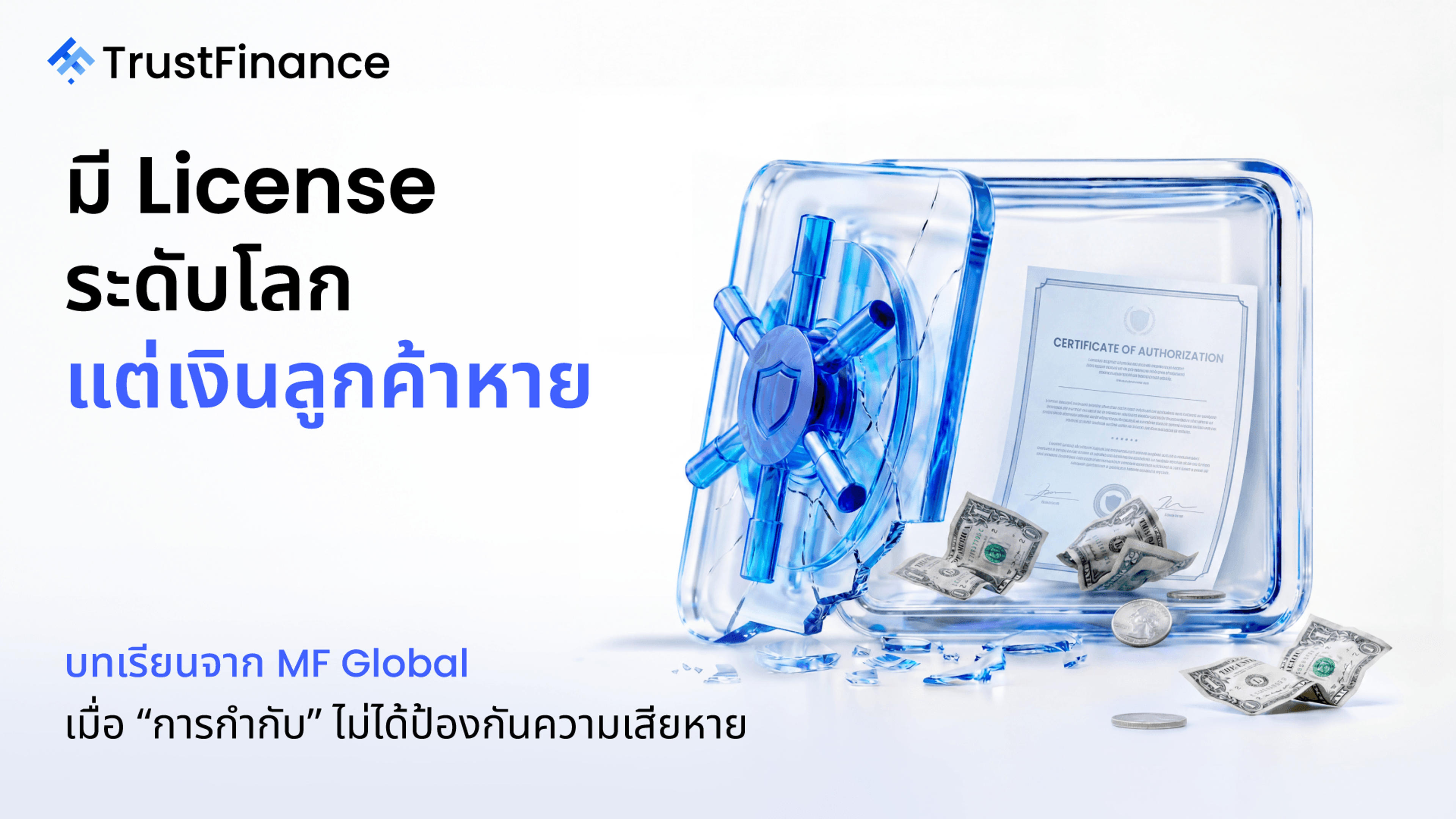
Case Study: MF Global — Globally Licensed, Yet $1.6 Billion in Client Funds Disappeared
One of the clearest events reflecting the limitations of a License is the case of MF Global, a futures brokerage firm in the U.S. that was regulated by the CFTC and NFA, considered Tier 1 financial authorities globally.
In the eyes of investors, this company should have had high safety standards. However, in 2011, MF Global went bankrupt, and it was discovered that approximately $1.6 billion in client funds had disappeared (According to U.S. House Financial Services Committee Report, 2012)
This event clearly demonstrates that even under high-level regulation, risks are not necessarily prevented. Regulatory systems cannot stop problems immediately, and damage occurs before authorities can intervene.
What Does a License NOT Protect? What You “Still Need to Watch Out For”
While a License has its benefits, there are many things it cannot prevent. In financial history, there are numerous cases that clearly reflect this point, such as Bernard Madoff, who caused over $50 billion in damages despite being within the regulatory system (According to SEC), or the case of WorldSpreads, where over £13 million in client funds were found missing (According to UK FSA).
These cases demonstrate that a License cannot always prevent fraud, and even with client fund segregation systems, loopholes can still exist. Furthermore, a License cannot prevent conflicts of interest or a lack of transparency in business models, and regulated companies can still go bankrupt due to market shocks, such as the case of Alpari (UK) in 2015.
Even in the present day, the case of FTX reflects that a seemingly credible image does not always reflect the true internal risks.
What a License Does NOT Protect “Globally”
This is where most investors misunderstand the most. Many ask what a License protects, but not “where it protects.”
In reality, many brokers have multiple entities in various countries, and clients from different regions might be under different corporate entities. This means that protection can vary entirely, even under the same brand.
Therefore, a seemingly credible License might not cover you at all.
What a License Cannot Tell You: The Voice of Real Users
A License can only tell you about the structure, but it cannot tell you “what is actually happening” within the system.
In many cases, problems don't start with big news but with small signs, such as delayed withdrawals, changes in customer service responsiveness, or recurring complaints of the same nature.
These issues are often reflected in “user reviews” and emerge before problems escalate into a crisis.
Therefore, reviews are not just opinions, but rather data on the company's actual behavior at that time. If there's a consistent pattern of recurring problems, that's a risk signal that should not be overlooked, and it's something a License cannot tell you.
Conclusion: The Real Risk Is Not in the Market
MF Global didn't collapse because it lacked a License; it collapsed despite having a high-level License. This is the most crucial lesson for all investors.
A License is the starting point for credibility, but not a guarantee of safety.
In the financial world, a License is what a company tells you, but a Review is what users are actually experiencing. Both must be used together.
TrustFinance Perspective
Before trusting a License, you should investigate deeper than just the documents. Before investing, you should look at actual behavior, not just the image.
Because ultimately,
Trust is not a feeling; it's something you can verify.
And sometimes, the most significant risk
is not in the License, but in the “voice of real users” that many overlook.
Written by
TrustFinance
TrustFinance helps financial companies build credibility and traders make safer choices through verified profiles, authentic reviews, and research-driven insights.
Best pick of the Week
Related Articles