Loading
How to Choose a Forex Broker in 2025: The Ultimate Investor Guide
T
Thanakit Sutto
Sep 12, 2025
10 min read
715

Complete Guide to Choosing the Right Forex Broker: Protect Your Investment
Choosing the wrong Forex broker is like setting sail in a leaky boat. No matter how skilled you are at trading, choosing the wrong partner from the start could result in losing your entire investment. Whether it’s due to withdrawal issues, fraud, or unstable platforms, the risks are real. Stories of investors falling victim to unregulated brokers continue to surface, leading to significant financial losses.
That’s why choosing a Forex broker isn’t just about finding a platform to place your trades—it’s about selecting the "first door" to the investment world. If you choose the right and reliable door, your journey will be smooth and safe. But if you choose wrong, you'll face numerous risks ahead.
This guide has been designed as the most complete resource for every investor, whether you're just starting or have years of experience. We’ll dive into every essential aspect, from verifying licenses and hidden fees to evaluating platforms and reading reviews like a pro. By the end, you’ll have the confidence to select a trustworthy broker tailored to your trading style and investment goals. Reading more about The 5 Levels of Forex Broker License

What Is a Broker, and Why Does Choosing the Right One Matter?
In the world of foreign exchange (Forex) and contracts for difference (CFDs), retail investors can’t trade directly in central markets. That’s where brokers come in—they act as intermediaries, connecting retail investors to global financial markets and enabling them to place trades efficiently.
However, not all brokers are created equal. Brokers can be divided into two main categories:
- Regulated Brokers: These brokers are licensed and overseen by government financial regulatory authorities. They are subject to strict rules, such as segregating client funds from company funds, maintaining sufficient reserves, and providing insurance to protect client funds in the event of bankruptcy.
- Unregulated Brokers: These brokers operate without oversight from any regulatory body. This means there’s no one to monitor their practices, making them incredibly risky. If issues arise, you may have no recourse to recover your money.
A good broker can help investors:
- Ensure the safety of their funds: backed by oversight from regulatory authorities.
- Access fair trading conditions, such as reasonable spreads and commissions.
- Use advanced tools and technologies to enhance analysis and decision-making.
- Receive quality customer service: with real support when issues arise.

The 7 Pillars: Key Criteria for Choosing a Forex Broker
Choosing the right broker requires evaluating several factors. Here are the 7 most important criteria, or the "7 Pillars," to guide your decision-making process.
1. Regulation and Licensing
This is the most critical factor when choosing a broker. Think of it as the first layer of protection for your investment. A license from a strict regulatory authority indicates that the broker has been vetted and complies with regulations designed to protect investors.
- Top Regulatory Authorities (High-Tier Regulators):
- FCA (Financial Conduct Authority): United Kingdom—Known as one of the strictest in the world.
- ASIC (Australian Securities and Investments Commission): Australia—high standards for consumer protection.
- CySEC (Cyprus Securities and Exchange Commission): Cyprus—a gateway to the EU market, adhering to MiFID II rules.
- MAS (Monetary Authority of Singapore): Singapore—a reputable financial hub in Asia.
- Levels of Regulatory Stringency:
- High: FCA, ASIC, and MAS—provide maximum protection.
- Medium: CySEC, DFSA (Dubai), FSCA (South Africa)—well-regarded but slightly less stringent.
- Offshore: FSA (Seychelles), FSC (Mauritius), VFSC (Vanuatu)—Less strict and often offer high leverage, increasing risk.
2. Transparent Fees
Trading fees directly impact your profits. A good broker should clearly outline all costs.
- Spread: The difference between the bid and ask prices—lower is better.
- Commission: Fees charged per lot traded, commonly found in ECN or Raw Spread accounts.
- Swap: Overnight holding fees, which may be positive or negative.
- Hidden Costs: Check for deposit/withdrawal fees or inactivity fees for dormant accounts.
3. Account Types and Leverage
A good broker should offer diverse account types to match different investor needs.
- Basic Account Types:
- Standard Account: Ideal for beginners; no commissions, but spreads are wider.
- ECN Account: For professional traders; has commissions but offers very tight spreads.
- Cent Account: Perfect for testing real trades with minimal funds.
- Demo Account: Simulated trading with virtual money for practice and strategy testing.
- Leverage: This allows you to trade larger positions than your actual capital. While high leverage can amplify profits, it also dramatically increases risk. Beginners should start with moderate leverage.
4. Trading Platforms and Tools
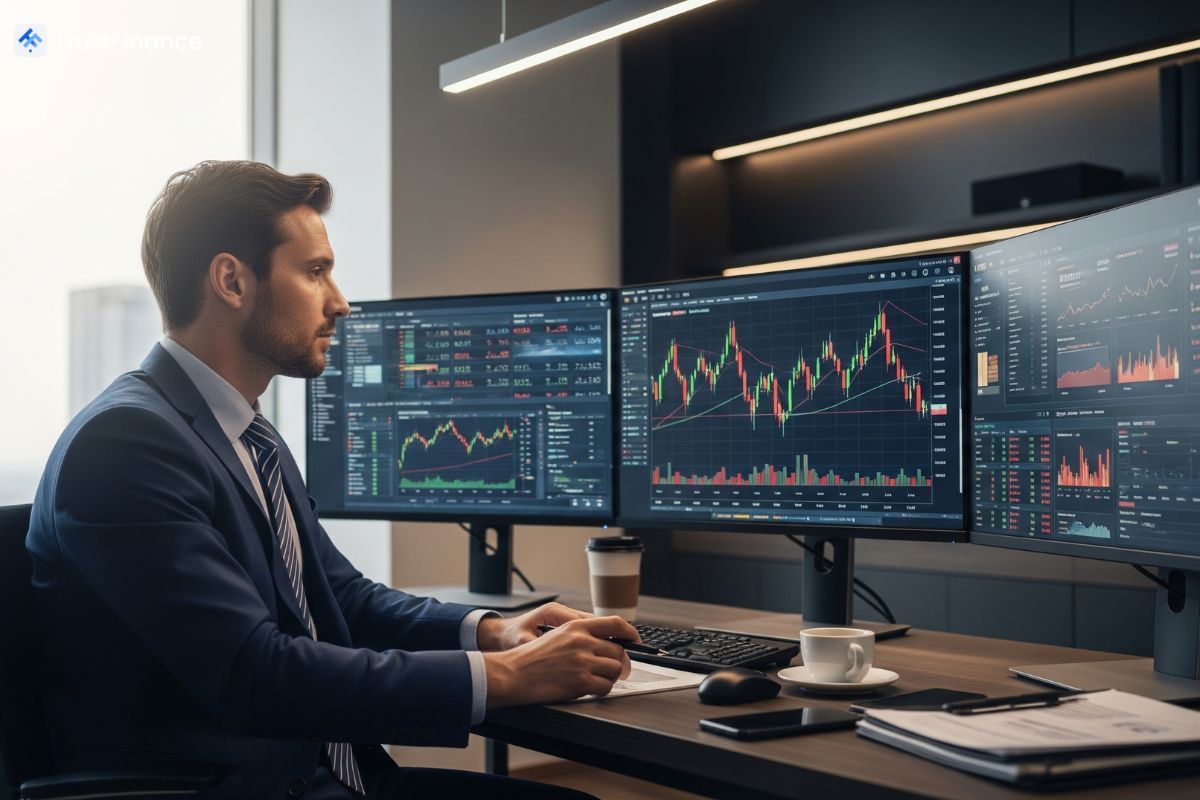
A trading platform is your workspace—it must be stable, user-friendly, and equipped with essential tools.
- Popular Platforms:
- MetaTrader 4 (MT4): Industry standard, highly reliable, with numerous Expert Advisors (EAs) and indicators.
- MetaTrader 5 (MT5): A newer version with support for a wider range of assets.
- cTrader: Loved for its pricing transparency and Depth of Market (DOM) features.
- Proprietary Platforms: Custom platforms developed by brokers, often with unique features.
- Additional Tools: Features like copy trading (replicating others’ trades), social trading (trading communities), or auto trading (automated strategies) can be incredibly helpful, especially for beginners.
5. Fast and Convenient Deposits/Withdrawals
Transferring money in and out of your broker account should be smooth and quick.
- Payment Methods: Look for brokers offering diverse options like local bank transfers, QR codes, or e-wallets (Skrill, Neteller).
- Withdrawal Timeframe (SLA): A good broker processes withdrawals within 24-48 business hours.
6. Customer Support
When problems arise, you need fast, effective help.
- Language Support: Having customer service in your native language is a significant advantage.
- Contact Channels: Look for multiple options like live chat, email, and phone support.
- Availability: 24/5 or 24/7 support is ideal, given that Forex markets operate 24 hours a day, 5 days a week.
7. User Reviews and Market Reputation
Real user reviews can provide valuable insights, but you need to read critically.
- How to Read Reviews: Be wary of overly positive or negative reviews. Look for detailed feedback that highlights specific pros and cons.
- Trusted Platforms: Sites like TrustFinance.com offer reliable reviews and TrustScores based on user feedback, giving you a balanced perspective.
How to Verify a Broker (Step-by-Step)
- Check Licenses: Cross-check the broker's name or license number directly on the regulator’s official website, such as the FCA or ASIC.
- Dig Deeper: Search the broker’s name on TrustFinance for reviews and license verification. Look for news articles or discussions on platforms like Reddit to identify recurring issues.
- Test the System: Start with a small deposit, place trades, and try withdrawing funds to evaluate the broker's reliability and process speed.
Common Mistakes Beginners Make
- Choosing a Broker Based on High Bonuses: Unrealistically high deposit bonuses often come with complicated terms and could be a red flag.
- Not Reading Terms & Conditions: This document contains critical details about fees and rules. Ignoring it can lead to unexpected disadvantages.
- Falling for Fake Reviews: Avoid trusting reviews that seem overly promotional or baselessly critical.
- Overusing Leverage Without Understanding It: High leverage can quickly wipe out your account if not managed wisely.
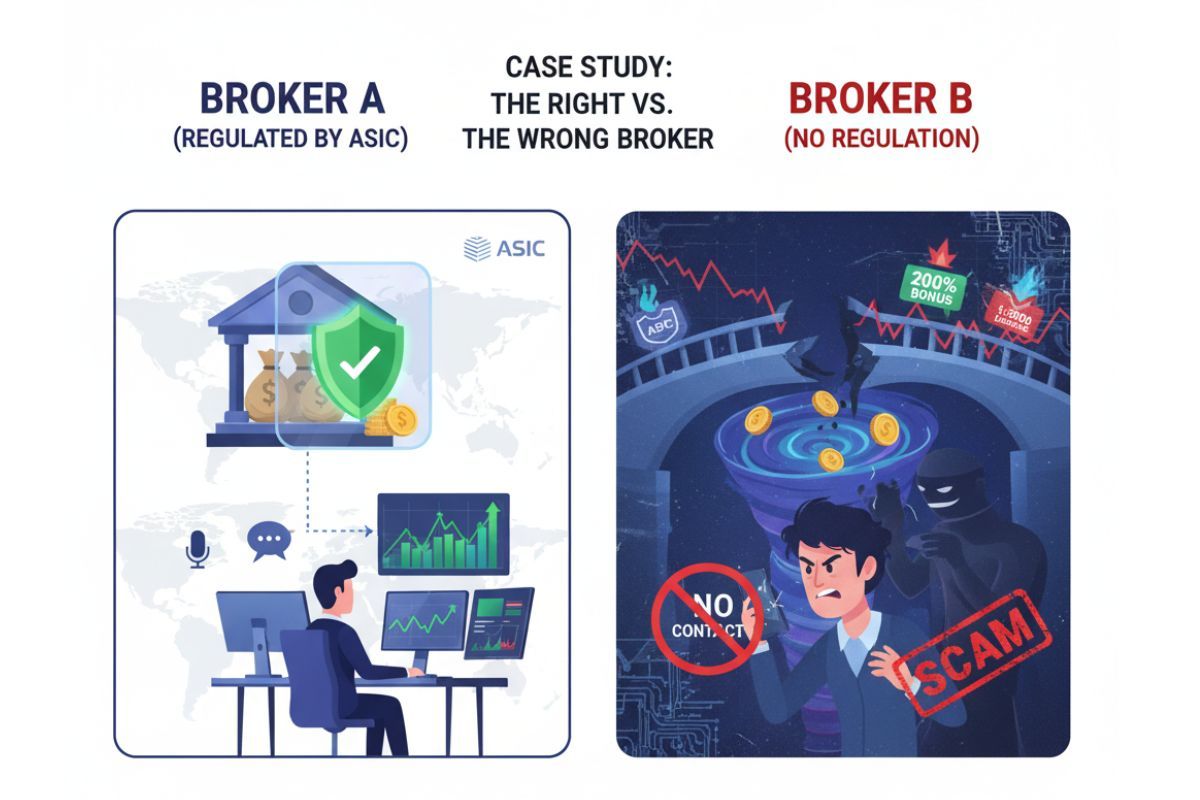
Case Study: The Difference Between the Right and Wrong Broker
- Broker A (regulated by ASIC): Clients trade with peace of mind knowing their funds are held in top-tier banks. If issues arise, the broker is legally accountable to the regulator.
- Broker B (Unregulated): Promises 200% bonuses and 1:3000 leverage. When clients attempt to withdraw funds, they face delays or refusal, with no way to recover their investments.
Choose the Right First Door
Choosing a Forex broker is a strategic decision that directly impacts your investment future. It's the first gateway that determines whether the path ahead will be stable or filled with risks. One wrong choice could mean losing all the capital you've worked so hard to earn.
To help you get started on the right track, we recommend using this checklist as a guide, and most importantly, use neutral tools to verify information. Use TrustFinance.com to check licenses, read reviews from real users worldwide, and compare brokers in detail.
But knowing how to choose isn't enough—you also need to know what to avoid.
Many people who've done their homework still fall victim to brokers that appear trustworthy on the surface because they missed critical warning signs. We've compiled lessons from real victims in 10 Warning Signs Your Broker May Be Untrustworthy: Lessons from Those Who Lost Everything so you can identify red flags before it's too late.
Investing time in research today is protecting your capital in the long run.
Written by
T
Thanakit Sutto
Finance content writer with a passion for investing, believes that good knowledge empowers smart decisions.
Best pick of the Week
Related Articles