Loading
Related Articles

31 अग. 2026
When Trust Becomes an Asset You Can Audit


Related Articles
31 अग. 2026
When Trust Becomes an Asset You Can Audit

TrustFinance
फ़र. 18, 2026
5 min read
273

In the online financial world, a “license” is one of the first things investors look at when evaluating a broker or financial company. But a more important question than simply having a license is:
To make this easier for users, TrustFinance developed the License Monitoring Program (LMP) — a system designed to verify and monitor the license status of financial companies based on official regulatory sources.
This article explains what LMP is, how it works, and how you should interpret license statuses when viewing a company profile.
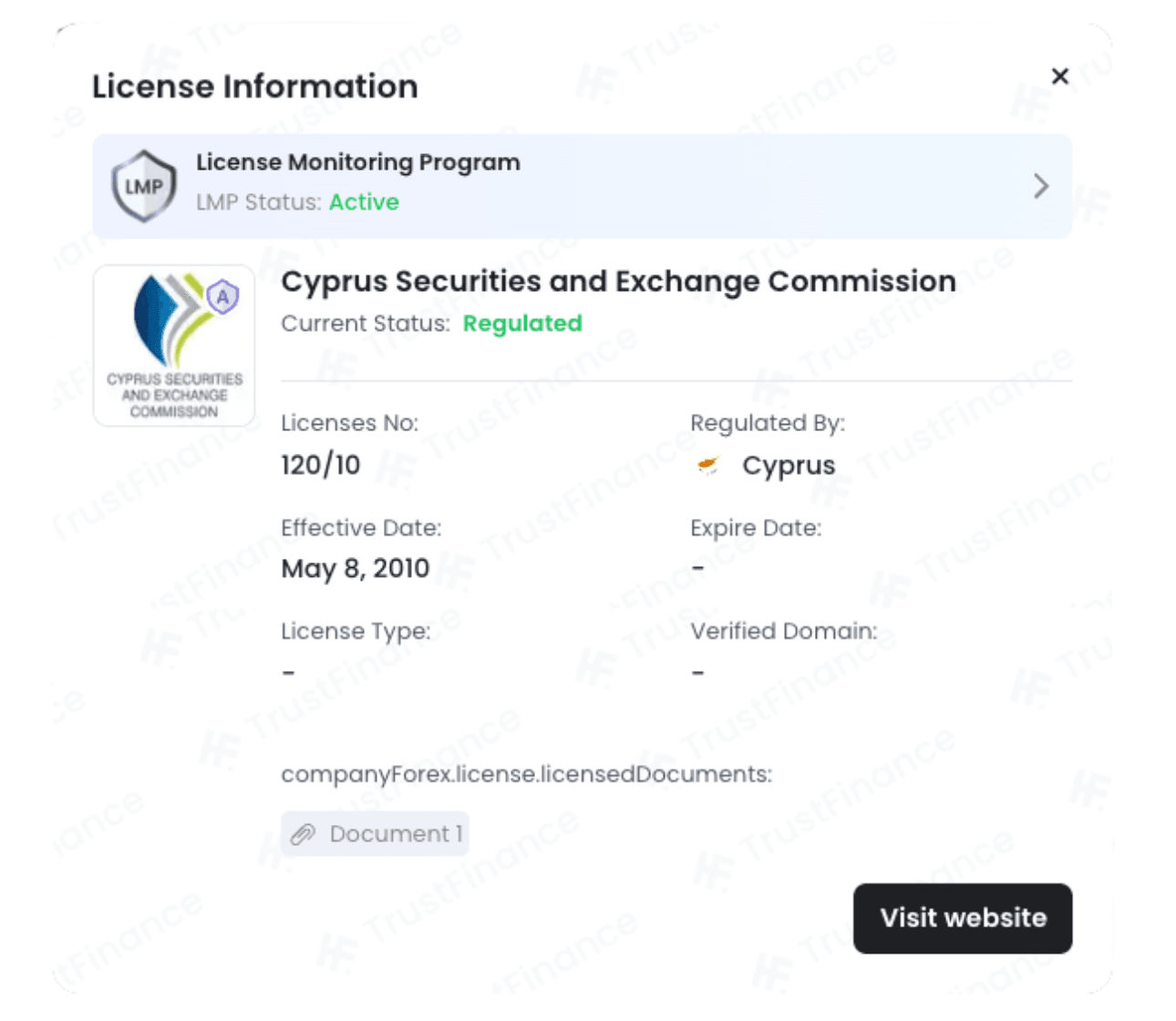
License Monitoring Program (LMP) is a system used by TrustFinance to verify and monitor the regulatory license status of financial companies and display that status on the company’s public profile page.
LMP:
It is a license status monitoring system designed to improve transparency by checking license information against official regulatory sources.
Many companies can display license details on their own websites. However, displaying information alone does not confirm:
LMP helps reduce this uncertainty.
TrustFinance checks license information against official regulatory databases and updates the company’s profile status according to its monitoring cycle.
This creates an important distinction between:
Self-declared License
and
Verified & Monitored License
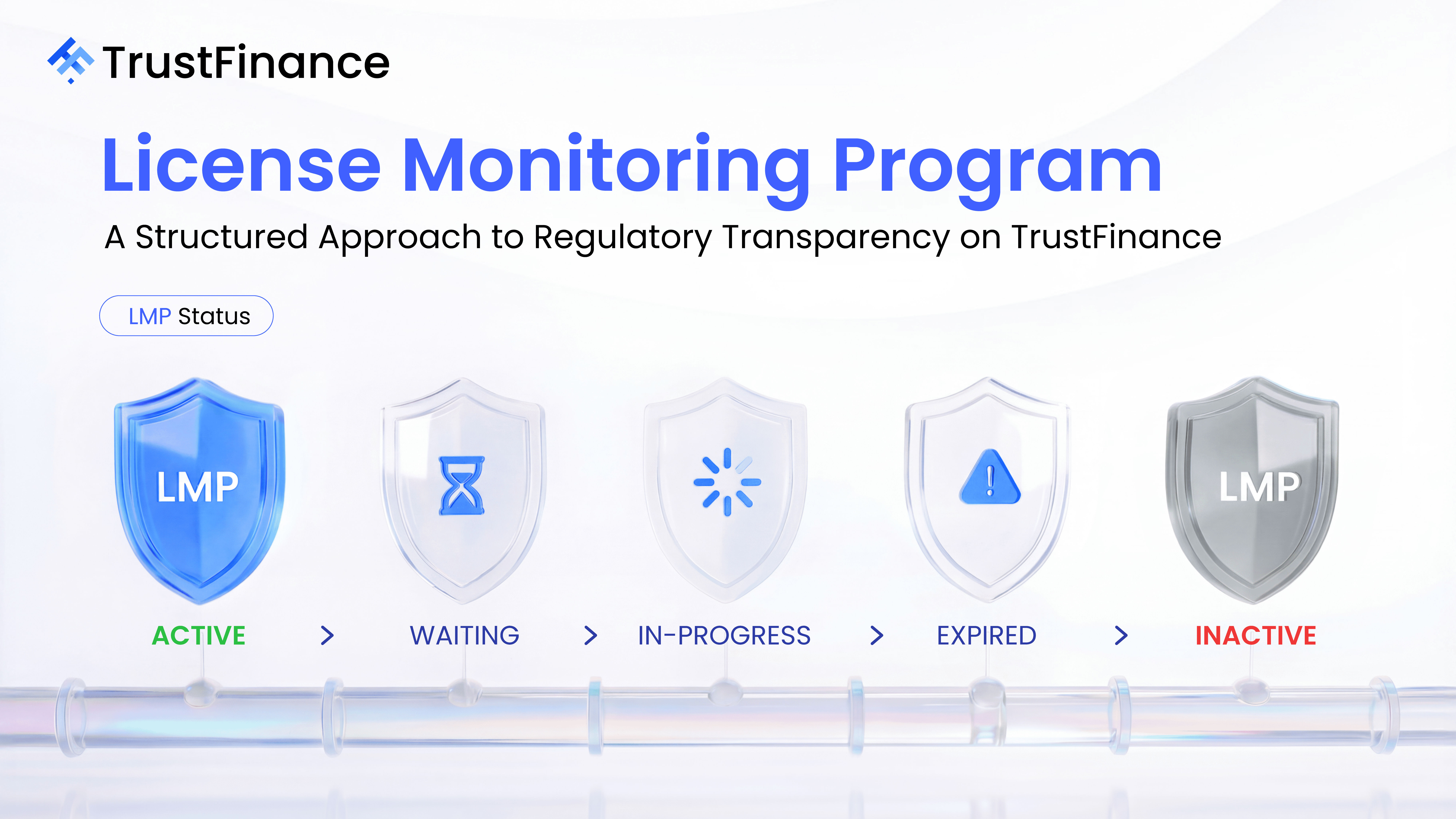
When you visit a company profile on TrustFinance, you may see one of the following license statuses:
This means TrustFinance has verified that:
“Active” reflects the license status based on the most recent verification cycle.
This status means the license has entered a scheduled quarterly review cycle.
It does not indicate a problem.
It simply means the system is preparing to reconfirm the license details.
This means TrustFinance is currently verifying the license information with the relevant regulatory authority.
Once the review is complete, the status will update accordingly.
This status may appear when:
An Inactive license is not currently being monitored under LMP as an active verified license.
“Expired” means TrustFinance has confirmed through official sources that:
Currently, “Expired” may reflect either:
When a license is marked as Expired:
TrustScore 2.0 is TrustFinance’s credibility rating system.
Its weighting structure is:
An Active license under LMP contributes to the 40% regulatory and security component.
However, LMP does not automatically increase a company’s score.
If user reviews are negative, the overall TrustScore may still be impacted.
LMP strengthens the regulatory transparency component — but it does not replace real customer experience.
To avoid misunderstanding:
LMP simply verifies and monitors license information based on official sources.
License Monitoring Program is a transparency tool. It helps reduce uncertainty, but it should not be the only factor in your decision. Before investing, consider:
Transparency improves clarity. Sound investment decisions require a broader evaluation.
License Monitoring Program (LMP) is designed to help investors see whether a financial company’s license is verified and monitored based on official regulatory sources. For users, LMP reduces uncertainty, adds context, and improves visibility into regulatory information. It does not replace due diligence, but it helps you make better-informed decisions.
TrustFinance
TrustFinance helps financial companies build credibility and traders make safer choices through verified profiles, authentic reviews, and research-driven insights.
