Loading
Evaluating Alternatives to Proprietary Trading Assessments: Leveraging Strategic Bonuses for Private Portfolio Management

TrustFinance
Jun 02, 2026
10 min read
51

In an era of increased accessibility to global financial markets—including foreign exchange, precious metals, equity indices, and energy commodities—traders are consistently seeking methods to scale their portfolios. A prominent trend currently gaining momentum across Southeast Asia, including Thailand, is the "Prop Firm" model (Proprietary Trading Firm). This model grants traders access to significant institutional capital, provided they meet specific profit targets and adhere to strict risk management mandates.
While the prop firm model appears attractive to retail traders with limited capital, the rigorous assessment criteria present significant hurdles. Many traders find themselves incurring repeated evaluation fees without ever achieving a return on investment.
This analysis by TrustFinance examines the structural realities of prop firm evaluations and presents a more flexible alternative that may mitigate psychological pressure: managing private portfolios while utilizing strategic "deposit bonuses." Established global brokers, such as XM, provide these incentives to enhance capital efficiency and allow traders to scale their operations independently.
Structural Constraints: Key Considerations Before Entering Prop Firm Evaluations
Although proprietary trading firms offer an enticing scaling model, the assessment structures often include challenges that warrant careful consideration:
- Sunk Costs from Assessment Fees: Participation requires an upfront entry fee. If a trader fails to maintain the account within the specified mandates, these fees are typically non-refundable. Repeated failures can lead to cumulative costs exceeding the initial capital required to open a private trading account, which would offer greater managerial flexibility.
- Psychological Pressure from Max Drawdown Limits: Most firms impose strict daily and total drawdown caps. These mandates can limit a trader’s ability to navigate natural market volatility, often leading to psychological stress and deviate-from-plan decision-making.
- Profit Targets and Time Constraints: Many evaluation models require traders to hit specific profit targets within a limited timeframe. This temporal pressure often forces traders to increase their risk exposure beyond their established plans, frequently leading to overtrading.
- Counterparty and Platform Risk: The rapid growth of the prop firm industry has outpaced regulatory standardization. The sector has seen instances of service suspensions, sudden rule changes, and payout delays, representing systemic risks where traders may lose both their time and earned incentives.
- Withdrawal Hurdles and Tax Implications: Profit-sharing distributions from foreign entities often involve specific cycles and complex documentation. Furthermore, receiving income as a profit share from an overseas corporation can complicate personal income tax filings compared to standard private trading.
Strategic Shift: Leveraging Bonuses for Private Portfolio Management
For traders prioritizing risk management and independence, returning to private capital management offers a high degree of flexibility. When combined with the support structures of established brokers like XM, strategic deposit bonuses can enhance portfolio liquidity, allowing for scaled strategies without the restrictive mandates imposed by prop firms.
The XM Bonus Structure: A Tool for Capital Efficiency
XM offers a tiered deposit bonus structure designed to provide over $5,000 in additional equity:
- 100% Bonus up to $200: This provides a one-to-one capital match. For example, a $200 deposit results in $400 in total equity, significantly expanding the margin buffer.
- 50% Bonus up to $500: Following the initial tier, subsequent deposits earn a 50% credit to support continued operations.
- 20% Bonus up to $5,000: A structure designed for long-term capital scaling to maintain consistent portfolio liquidity.
Also, XM offers a $30 No-Deposit Bonus. New verified users receive a $30 credit to test strategies in live market conditions. Profits generated are withdrawable subject to the broker’s terms.
Operational Mechanics: The Role of Bonuses in Risk Management
It is essential for traders to understand that while bonus credits are not withdrawable as cash, they are integrated into the total equity to serve as margin for opening positions.
In practice, these bonuses act as an equity buffer, providing flexibility during periods of high market volatility and reducing the probability of a "stop out." This allows traders to execute more effective position sizing while utilizing less of their own realized capital. However, traders must remain cognizant that while bonuses enhance margin capacity, disciplined risk management remains the primary determinant of long-term success.

Case Study: The Impact of a 100% Bonus in Live Market Conditions
Consider a scenario involving gold (XAU/USD) trading to illustrate risk management efficiency:
- Standard Private Capital: A $200 deposit provides $200 in equity. In high volatility, a minor adverse price swing can trigger a forced liquidation due to limited margin.
- XM 100% Deposit Bonus: A $200 deposit plus a $200 bonus credit yields $400 in total equity. When opening a 0.05 lot position, the additional credit serves as a significant safety margin, allowing the strategy to withstand broader price swings and giving the trader more time for the market to move toward the analyzed direction.
Transparency and Essential Terms
To maintain objective standards, traders should consider the following policy conditions:
- Withdrawal Rights: Bonus credits are for margin purposes only and cannot be withdrawn. However, 100% of the profits generated from using the bonus are withdrawable.
- Proportional Bonus Removal: Upon any withdrawal of capital or profit, the system removes a proportional percentage of the bonus credit.
- Eligible Accounts: Deposit and welcome bonuses apply exclusively to Standard and Micro accounts; Ultra-Low accounts are ineligible.
Based on this case study and the outlined transparency conditions, managing private capital through the application of bonus credits tangibly generates strategic flexibility and fortifies risk management capabilities. However, when benchmarking this approach against proprietary trading firm evaluations, traders may require further data to determine which path better aligns with their individual risk tolerance and long-term objectives. Consequently, we have formulated an in-depth comparative analysis to clarify these considerations.
Comparative Analysis: Private Portfolios with XM Bonuses vs. Prop Firm Evaluations
Based on the comparative dimensions outlined above, it is evident that trading a private portfolio integrated with a deposit bonus mechanism provides greater independence and significantly mitigates psychological pressure. However, to execute this approach efficiently and ensure long-term stability, the most critical determining factor remains the "reliability of the intermediary." This raises the question of why a prominent broker such as XM provides a financial platform capable of effectively accommodating this specific trading structure.
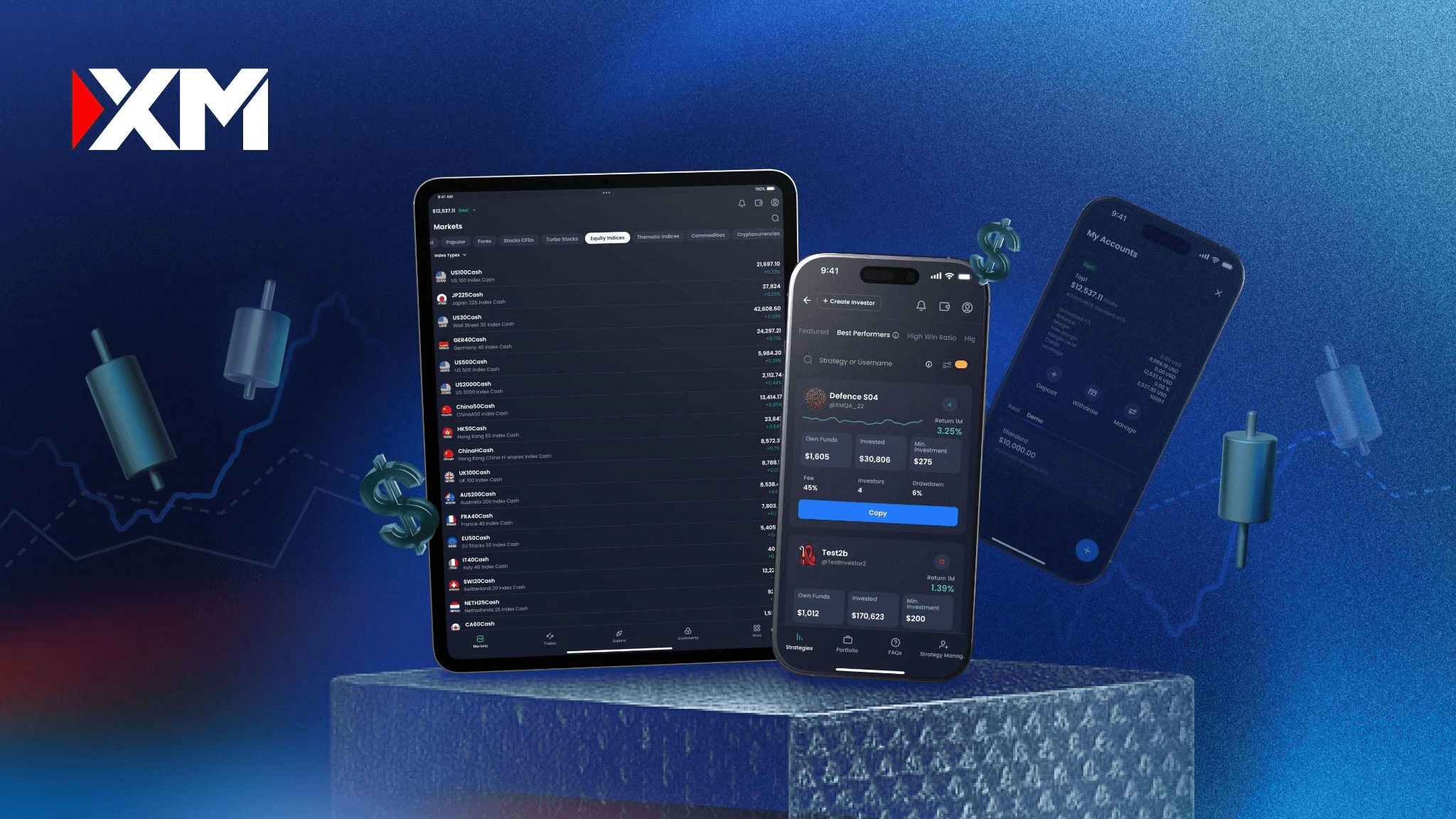
Analyzing the International Investment Infrastructure of XM
For investors prioritizing stability, XM maintains a robust infrastructure across several dimensions:
- High Security Standards: Client funds are strictly segregated from company operating accounts, and the entity is regulated by multiple global authorities.
- Negative Balance Protection: In the event of extreme market gaps, the system automatically resets negative balances to zero, ensuring losses never exceed deposited capital.
- Execution Quality: A policy of no rejections and no requotes effectively minimizes price slippage.
- Ecosystem Integration: Beyond self-directed trading, the platform offers Copy Trading for investors looking to diversify by following established strategies.
Conclusion: Determining the Optimal Path
Prop Firm Evaluations are suitable for highly experienced traders with proven systems who can operate under strict mandates and accept the structural risks of the prop firm industry.
Private Portfolios with XM Bonuses are suitable for traders seeking strategic independence, freedom from temporal or profit-target pressures, and the ability to access profits rapidly through a stable, regulated infrastructure. Features include the XM AI intelligent assistant for real-time market analysis, alongside support for risk diversification across more than 1,400 global assets. The ecosystem also encompasses a Copy Trading system to track professional trader strategies, risk-free Demo Competitions to enhance trading proficiency, and the XM Traders Club loyalty program, which converts trading volume into tangible benefits to sustainably compound portfolio value.
Investment Opportunities with XM
Open an account with XM Thailand today to seize the opportunity to gain more with award-winning services from leading institutions worldwide. XM Thailand offers a choice of over 1,400 instruments and 10 feature-rich trading platforms, including the XM app for iOS and Android as well as the popular MT4 and MT5 platforms. Join 20 million clients who trust XM, a multi-regulated All-in-One World Class Broker. Enjoy withdrawals processed within 24 hours and stay informed by following XM on Facebook, Instagram, and TikTok. Visit their website for more information.
Risk warning: Our services involve a significant risk and can result in the loss of your invested capital. *T&Cs apply.
Please note that products may vary between XM entities. For further information, please visit the XM website.
Written by
TrustFinance
TrustFinance helps financial companies build credibility and traders make safer choices through verified profiles, authentic reviews, and research-driven insights.
Tags:
Best pick of the Week
Related Articles