Loading
Which Commodities to Trade Amid Global Weather Volatility: Understanding the Climateflation Crisis

TrustFinance
Jul 23, 2026
10 min read
8

In the macroeconomic landscape, encompassing domestic, regional, and global economies, the primary drivers of inflation are no longer confined to central bank monetary policies or geopolitical conflicts. Climate conditions have emerged as a critical variable, inevitably disrupting global supply chains.
The global economy is currently entering an era termed "Climateflation"—inflation driven by extreme weather volatility. When major global agricultural regions face natural disasters, crop yields decline abruptly, causing commodity prices to surge. For traders and investors, this period presents both challenges and opportunities, provided they can interpret natural warning signals and utilize appropriate market access tools.
This article examines the correlation between weather patterns and commodity price trajectories, reviews the recent impact of climate on various commodities, and outlines how to select professional platforms and instruments to navigate this volatility.
What is Climateflation? When Nature Dictates the Trading Board
"Climateflation," a portmanteau of Climate and Inflation, describes a condition where the prices of consumer goods, agricultural products, and energy rise as a direct consequence of increasingly severe and unpredictable natural disasters.
When severe droughts strike South America or typhoons devastate Southeast Asia, the output of soft commodities is immediately impacted. A sudden contraction in supply, coupled with stagnant or rising global demand, inherently causes the prices of these commodities on the futures market to escalate rapidly.
Natural Disasters: The Catalyst for Supply Chain Crises
The impact of climate volatility extends beyond localized agricultural damage; it severely fractures global supply chains. When natural disasters occur, critical infrastructure and logistical routes utilized for transporting commodities are frequently severed.
For instance, severe droughts can deplete water levels in crucial global shipping canals, halting the transit of agricultural and energy cargo vessels. Similarly, flash floods can destroy transportation networks connecting agricultural hubs to export terminals. These logistical delays create immediate supply bottlenecks. Even if a portion of the harvest survives the extreme weather, a paralyzed supply chain unable to deliver goods to the global market on schedule induces market panic, ultimately driving futures prices upward.
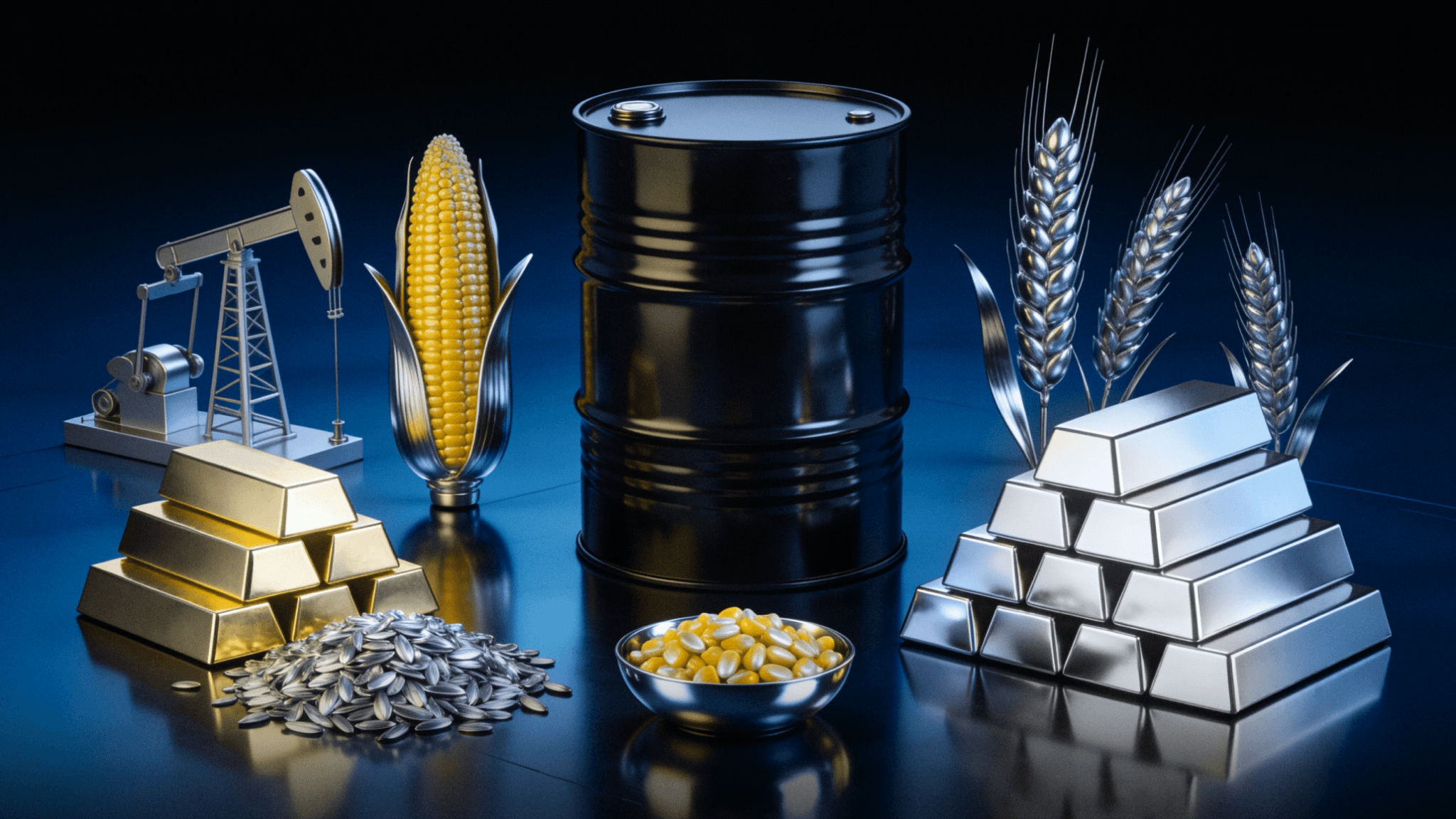
Recent Climate Impacts on Commodity Markets
1. Soft Commodities: This category is highly sensitive to weather and supply chain disruptions, consistently generating market volatility.
- Arabica Coffee: Prices have surged significantly, primarily due to prolonged droughts in Brazil, the world's largest producer. This, compounded by typhoons striking Vietnam (a primary Robusta producer), has resulted in a severely tightened global coffee market.
- Cocoa: Prices remain at historic highs following severe flash floods in the Ivory Coast, which disrupted transportation and damaged crops. Coupled with the risk of returning El Niño conditions, cocoa remains an asset closely monitored by short-term traders.
- Sugar and Wheat: Although the broader wheat market may exhibit a supply surplus, erratic rainfall during the planting season remains a persistent risk factor capable of reversing price trajectories.
2. Energy Commodities
- Natural Gas: Demand is projected to increase, driven not only by unusually harsh winters in Europe and the United States but also by the exponential growth of Artificial Intelligence (AI) Data Centers, which require massive electricity consumption.
- Crude Oil: While West Texas Intermediate (WTI) and Brent crude may face oversupply conditions keeping prices relatively low, ongoing geopolitical conflicts in the Middle East serve as unpredictable catalysts capable of driving prices up at any moment.
3. Industrial Metals
- Copper: Dubbed the "oil of the clean energy era," copper faces massive demand driven by the green energy transition, including electric vehicles (EVs), solar panels, and wind turbines. Erratic weather patterns have complicated mining operations in South America, contributing to supply shortages.
Challenges and Hidden Costs in a Volatile Market
When news of hurricanes, droughts, or supply chain disruptions breaks, commodity prices react within minutes. Traders subsequently face extreme volatility, which introduces a significant operational cost known as the "spread"—the difference between the Bid (buy) and Ask (sell) price. In financial markets, the spread is the primary cost of opening a position. During periods of high volatility, some liquidity providers widen these spreads to hedge against risk.
Gold: A Parallel Asset in an Era of Uncertainty
When discussing investments during periods marked by both climate and geopolitical volatility, gold remains the traditional safe-haven asset.
During crises of confidence, a segment of investors typically liquidates risk assets, reallocating capital into gold, often driving its price to new highs. Executing gold investments through platforms such as the XM App or MT4/MT5 terminals allows traders to utilize fixed leverage. This ensures that leverage is not abruptly reduced during high-impact news events, enabling precise calculation and management of investment capital.
Why the XM Ecosystem Meets Investor Demands
For investors entering the commodity market during the Climateflation era, the XM platform serves as a global gateway, offering comprehensive Contract for Difference (CFD) trading. Operating as an international platform, XM maintains cost stability and offers Ultra Low accounts prioritizing tight spreads, which remain compressed even during major news events. Coupled with a policy of zero hidden fees, this structure allows investors to accurately calculate projected costs and profits.
1. High-speed execution infrastructure: In the split second the US Department of Agriculture (USDA) releases its crop production forecasts, wheat or cotton prices can move sharply. XM’s servers can process orders in a fraction of a second. This, along with 'No Requote' and 'No Reject' policies, helps ensure smoother order execution. However, prices may still change depending on prevailing market conditions and volatility at that moment.
2. Liquidity Enhancement via Deposit Bonuses: When trading highly volatile commodities, managing risk and margin levels is essential. XM offers a tiered deposit bonus structure of up to $5,000 to help increase your portfolio management flexibility. Although the bonus credit cannot be withdrawn as cash, adding it to your equity balance allows it to act as an additional buffer. This provides more room to manage open positions and helps you navigate market volatility more systematically. Please note that bonus credits are subject to the program’s terms and conditions, and do not guarantee trading success or prevent losses.
3. Shortcuts for Beginners (Demo Trading and Copy Trading): For novices seeking to test systems, observe professionals, or utilize assistive tools before committing capital, the platform offers comprehensive services:
- $30 No-Deposit Bonus: Upon successful registration and identity verification (subject to company terms), users receive a $30 credit to test live trading environments without risking personal capital.
- XM Demo Competitions: Elevating the standard demo experience, users can join the free Demo Weekly competition for a chance to win a share of a cash prize pool. Alternatively, the Daily Arena requires a $5 entry fee for a chance to win guaranteed daily prizes ranging from $1,000 to $5,000.
- XM Copy Trading: For investors lacking the time to monitor weather forecasts or analyze charts, this system allows automated copying of over 18,000 professional trading strategies.
4. Rapid and Secure Transactions: Investment opportunities are time-sensitive. XM’s deposit and withdrawal system supports local bank integration, facilitating instant capital funding and rapid withdrawal processing.
5. Market Analysis Innovation: XM AI Translates Weather into Strategy: Monitoring global climate news and agricultural reports is complex and time-consuming. To bridge this information gap, XM integrates the XM AI intelligent assistant into its application. It processes macroeconomic data and fundamental factors into real-time, easily understandable summaries.
Practical Application for Commodity Volatility:
Investor Query: How will the weather in July 2026 impact wheat prices, and what are the optimal trading windows and price points?
XM AI Response: Recent reports from Reuters indicate wheat prices may trend downward toward $5.96 per bushel if support at $6.02 is broken, with resistance observed between $6.05 and $6.11. The Average Trading Range reflects a daily volatility of 2.77%. Regarding July weather, severe heat and drought conditions could constrain production and drive prices upward. Conversely, favorable and adequately moist conditions will likely cause prices to stabilize or decline. Trading Opportunities and Price Ranges: A critical support level sits near $5.96; a rebound is possible near this point if broader market and weather conditions are mild. Resistance remains at $6.05-$6.11; breaking this level could signal sustained upward momentum. Current volatility metrics aid in forecasting daily price movements, supporting short-term buy or sell strategies. Key July Events: European economic reports and CPI data are scheduled for mid-to-late July, which may impact overall market sentiment.
(Note: This data is general analysis intended to explain price factors and does not constitute investment advice.)

A standout feature of XM AI is its ability to seamlessly integrate insights, combining fundamental factors (such as weather conditions and economic reports) with technical analysis (like support and resistance levels on charts). This tool acts as a 24/7 analytical assistant, helping to reduce the time spent on market research and providing deeper insights to support more informed decision-making.
Entering the commodity market during the "Climateflation" era requires more than broad macroeconomic vision. It demands a synthesis of fundamental knowledge, technical chart analysis, and crucially, a robust financial partner.
A user base exceeding 20 million across 190 countries validates XM's reliability and its "BIG. FAIR. HUMAN." philosophy. The platform extends beyond simple trade execution, providing an ecosystem for growth through the XM Traders Club—a loyalty program awarding XMC points for trading volume, redeemable for continuous benefits.
If you are ready to identify opportunities in global market shifts through data analysis and proper risk management, while accessing a world-class platform designed to support your trading experience, becoming a part of the XM ecosystem is a compelling option.
Risk Warning: Trading Contracts for Difference (CFDs), forex, commodities, and other assets involves leverage, which carries a high level of risk and can result in the loss of all your invested capital. Past performance or statistics generated by Copy Trading strategies are not indicative of future results. Please ensure that you fully understand the risks involved and seek independent financial advice if necessary. The information in this article is for informational and educational purposes only and should not be construed as investment advice.
Investment Opportunities with XM
Open an account with XM today to seize the opportunity to gain more with award-winning services from leading institutions worldwide. XM Thailand offers a choice of over 1,400 instruments and 10 feature-rich trading platforms, including the XM app for iOS and Android as well as the popular MT4 and MT5 platforms. Join 20 million clients who trust XM, a multi-regulated All-in-One World Class platform. Enjoy withdrawals processed within 24 hours and stay informed by following XM on Facebook, Instagram, and TikTok. Visit their website for more information.
Risk warning: Our services involve a significant risk and can result in the loss of your invested capital. *T&Cs apply.
Please note that products may vary between XM entities. For further information, please visit the XM website.
Written by
TrustFinance
TrustFinance helps financial companies build credibility and traders make safer choices through verified profiles, authentic reviews, and research-driven insights.
Tags:
Best pick of the Week
Related Articles


