Loading
Forex Tax 2025: A Simplified Guide for Thai Traders – Everything Traders Need to Know About Tax

TrustFinance
Oct 29, 2025
11 min read
469

No Matter How Good You Are at Forex Trading, You Can't Escape Taxes
Many people start Forex trading because they see opportunities to generate income from global currency fluctuations. This market is open 24 hours a day, five days a week, and has the highest trading volume in the world. However, what many Thai traders often overlook is "taxes." Simply put, when you profit from Forex, how do you pay taxes? Do you have to file? Or does Thai law not yet support it?
These questions have clear answers in this article, because even though Thailand still "does not have specific laws" governing Forex trading like the stock market, income from Forex is still considered assessable income subject to tax under the Thai Revenue Code.
This article will guide you through understanding the law, related tax types, profit-loss calculation methods, documents to keep, real filing examples, and legal tax planning strategies. It is suitable for both beginners and traders who start to have consistent profits in 2025.
1. Legal Status of Forex in Thailand
Thailand has not yet issued specific laws directly regulating Forex trading. Therefore, this market is not under the supervision of the stock exchange. However, the Bank of Thailand (BOT) and the Securities and Exchange Commission (SEC) play a role in overseeing certain foreign exchange transactions and derivatives.
However, Thai tax law does not consider Forex trading illegal, but rather deems "income generated from Forex trading as assessable income" similar to income from other forms of investment.
From a tax perspective, profits you receive from Forex trading are considered assessable income under Section 40 (4) of the Revenue Code, which means this income falls under investment income or financial assets, similar to interest or dividends.
2. Do You Have to Pay Taxes on Forex Trading?
The answer is: Yes, you must pay taxes if you have actual income from Forex trading, whether it's from trading with domestic or international brokers. The tax criteria will depend on your status, specifically whether you are:
- a resident of Thailand or not. If you reside in Thailand for more than 180 days per year, you are obligated to include your worldwide income, including income from Forex trading, for tax calculation in Thailand.
- the income was transferred back into the country in that tax year. If you trade through an international broker and make a profit but do not transfer the money back to Thailand in the same year, that income may not be subject to Thai tax in that year. However, once it is transferred back, you must include it in your tax calculation.
For example, if you have profits from Forex trading in an overseas account but keep them in an online wallet, and you don't transfer them to a Thai bank account within 2025, you can file taxes only on your domestic income. However, once you transfer them back in 2026, that income will be included in the tax calculation for 2026.
For detailed information on each filing scenario, read more in the article "How to Pay Forex Taxes? Clear Summary for All Cases, What Beginners Should Know Before Filing"
3. Types of Taxes Related to Forex Trading
3.1 Personal Income Tax
This is the main tax applied to income from Forex. Traders must combine their "net profit from trading" with other types of income for that year to calculate taxes according to the progressive rates, which range from 0% to 35% based on net income brackets.
3.2 Withholding Tax
In some cases where the broker is domestic, withholding tax may be deducted before profits are paid to clients. However, for most Forex cases with international brokers, traders are responsible for calculating and filing their own taxes.
3.3 Tax on Foreign Income
For those who trade with international brokers, the income is considered foreign income, which is subject to tax in Thailand when brought into the country. The "tax credit" principle can be applied if tax has already been withheld in the country of origin, to avoid double taxation.
4. How to Calculate Profit and Loss, and Real Examples
Calculating Forex profits for tax filing involves these simple steps:
- Sum up all income from trading throughout the year (only from closed orders with actual profits).
- Deduct related expenses, such as fees, spreads, VPS costs, or internet costs used for trading.
- If there are losses in some months, they can be deducted to calculate "net profit."
- Combine the "net profit" figure with other types of income, such as salary or business income, to calculate annual income tax.
Example:
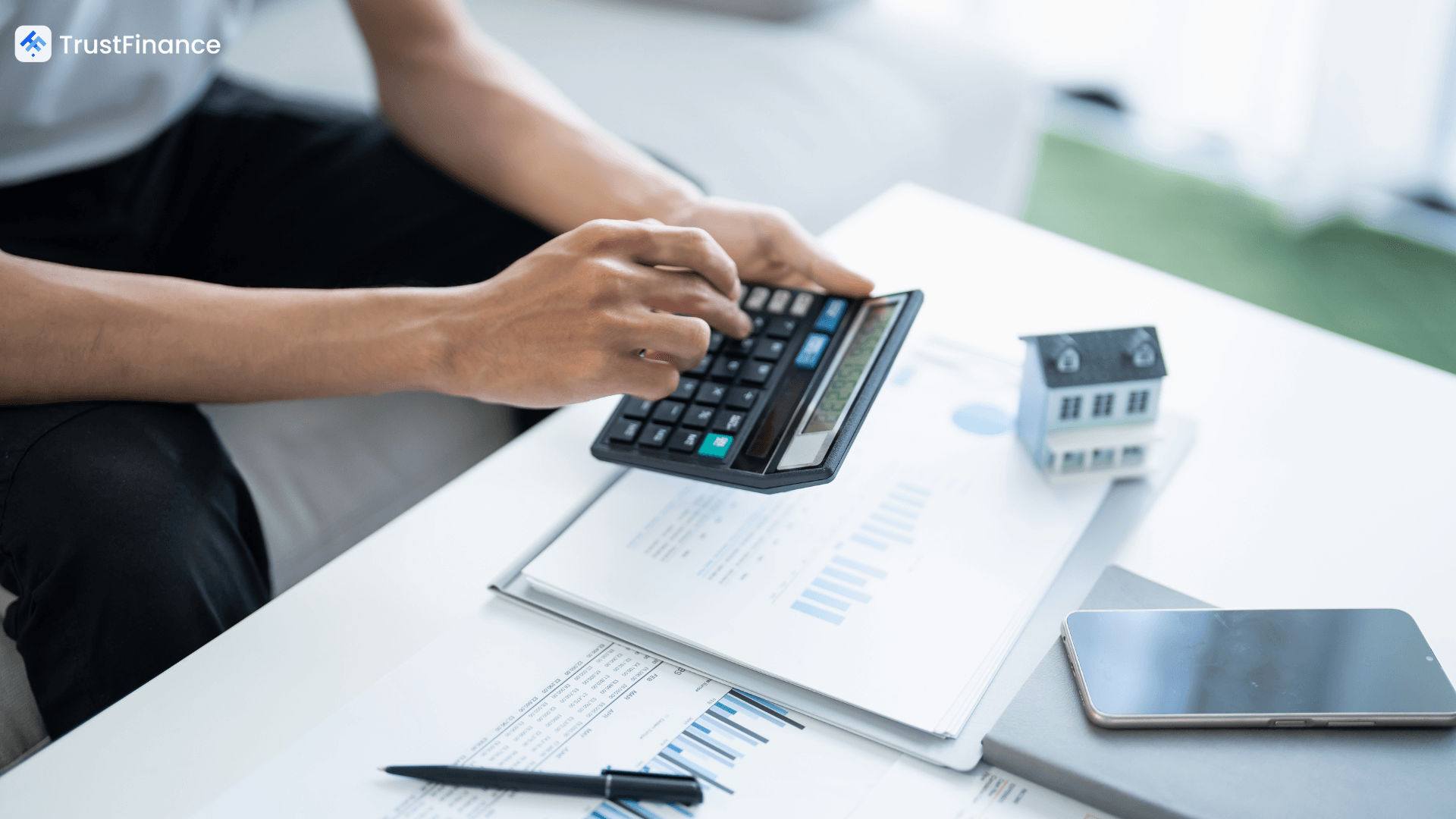
Mr. A had a Forex profit of 500,000 Baht for the entire year 2025 and an annual salary of 300,000 Baht.
Total income = 800,000 Baht
Deduct actual expenses of 50,000 Baht
Net income = 750,000 Baht
When calculating tax according to the progressive rates, this income will be subject to approximately 5–10% tax, depending on other deductions Mr. A has.
5. Documents to Prepare for Tax Filing
Even though Forex tax doesn't have specific laws, preparing all necessary documents will help ensure a smooth filing process and reduce the risk of retrospective audits.
Documents you should have include:
- Trading account statement from the broker, showing trading activities, deposits, withdrawals, profits, and losses throughout the year.
- Proof of money transfers in and out of the trading account and personal bank account.
- Broker's identification documents and license to confirm it is a legitimate broker.
- Receipts for trading-related expenses, such as platform subscription fees, trading software, or internet costs.
- Documents showing foreign income, in case of trading with an international broker.
Once collected, these should be summarized into a file or document folder for attachment when filing Form P.N.D. 90 through the Revenue Department's e-Filing system.
6. Example of Forex Tax Filing for Thai Traders
Suppose you have a Forex trading profit of 200,000 Baht and a salary income of 300,000 Baht.
Total annual income = 500,000 Baht. Deduct personal allowances of 60,000 Baht and social security contributions of 9,000 Baht.
Net income = 431,000 Baht.
When calculated according to the progressive tax rates:
First 150,000 Baht = Exempt
150,001 – 300,000 Baht = 10% (Tax payable: 15,000)
300,001 – 431,000 Baht = 20% (Tax payable: 26,200)
Total estimated tax payable = 41,200 Baht
This is just an example to illustrate the calculation principle. Actual figures may vary depending on individual deductions and other income.
7. Tax Filing Period and Forms Used
Those with income from Forex trading must file Form P.N.D. 90, which is for individuals with multiple sources of income. It can be filed through the Revenue Department's online system between January 1 – March 31 of the following year.
For example, income from 2025 must be filed by March 31, 2026. If filed after that, penalties and surcharges will apply according to the law.
8. Proper Forex Tax Planning: Maximize Profits, Minimize Taxes
Tax planning is not about tax evasion, but rather about "managing income and expenses" correctly according to the law, to pay only the necessary taxes. Professional recommendations include:
- Separate trading accounts from personal accounts.
This makes it easier to verify which income comes from trading and reduces complexity during tax filing.
- Keep records of all trading-related expenses.
Such as platform membership fees, trading software fees, or internet costs, as these can be deducted as expenses.
- Maintain monthly profit-loss summaries.
To get an overview for the entire year and accurately calculate net profit.
- Don't wait until the end of the year to calculate taxes.
You should estimate income during the year to plan for additional deductions or allowances in time.
- Consult a tax expert if you have high income or trade through multiple accounts.
An expert can help ensure correct tax filing and recommend the most suitable income structuring methods.
For more in-depth reading on planning techniques, you can refer to the article "Smart Forex Tax Planning Techniques — Keep More Profits, Pay Less Tax (Legally)"
9. Warnings for Those Who "Do Not File Taxes"
Although income from Forex may not be as easily verifiable as income from domestic companies, in an era where international money transfers are automatically reported, tax authorities can check whether there are funds entering or leaving accounts that qualify as income.
If audited and found to have actual trading income but failed to file taxes, traders may be subject to retroactive tax collection, along with penalties and surcharges of up to 100% of the outstanding tax.
Therefore, filing taxes correctly not only prevents risks but also reflects financial transparency, which is crucial for those who wish to develop themselves into professional traders in the long run.
10. Frequently Asked Questions About Forex Tax
Q: If I trade Forex but haven't withdrawn money from the broker's account, do I have to pay taxes?
A: If you haven't withdrawn and transferred the money back into the country, generally you might not have to pay taxes in that year. However, once it is transferred back to Thailand, that income must be included in the tax calculation.
Q: If I share a trading account with a friend, who has to file taxes?
A: The person who actually receives the profit or is named as the primary account holder must file the income, even if capital is shared. Clear documentation of profit sharing should be made.
Q: How much can I deduct for expenses?
A: If the expenses are directly related to trading, you can deduct them based on actual costs, or use a lump-sum deduction of 50% of the income, not exceeding 100,000 Baht, according to the general practice of the Revenue Department.
Q: If I incur losses throughout the year, do I still have to file?
A: You should still file, as it demonstrates your annual income status and allows you to keep records for planning in the following year.
11. Overview: Understanding Forex Tax Correctly Is Not Difficult
- Thailand still does not have "specific Forex laws," but income from Forex is considered assessable income under Section 40 (4), thus personal income tax must be filed.
- If you reside in Thailand for more than 180 days per year and have income from Forex trading, you must include this income in your tax filing.
- The calculation uses a progressive income tax system, and expenses can be deducted.
- Those who trade with international brokers should be aware of "foreign income," especially when it is transferred back into the country.
- Form P.N.D. 90 must be filed by March 31 of the following year.
- All evidence should be kept complete, from broker statements and receipts to expense records.
- If you have high income or multiple accounts, you should consult an expert
in tax matters for accuracy.
Conclusion
Forex trading offers an opportunity for independent income generation, but freedom comes with "responsibility." Therefore, understanding tax matters is crucial for all traders.
Don't view taxes as a burden, because in reality, they are a "self-protection tool" against legal risks and also help you manage your income transparently in the long run.
In 2025, many Thai traders are starting to prioritize correct Forex tax filing, which reflects the disciplined growth of the Thai trading community.
Therefore, if you want to be a "truly professional" trader, you must not only be able to make profits but also know how to be responsible for your own income.
You can be a skilled trader, but you must also know how to file taxes.
Source
Trade With Auntie – What is Forex Tax? How to Pay Taxes, 2024 Update
https://www.tradewithauntie.com/what-is-forex-tax/
Written by
TrustFinance
TrustFinance helps financial companies build credibility and traders make safer choices through verified profiles, authentic reviews, and research-driven insights.


