Loading
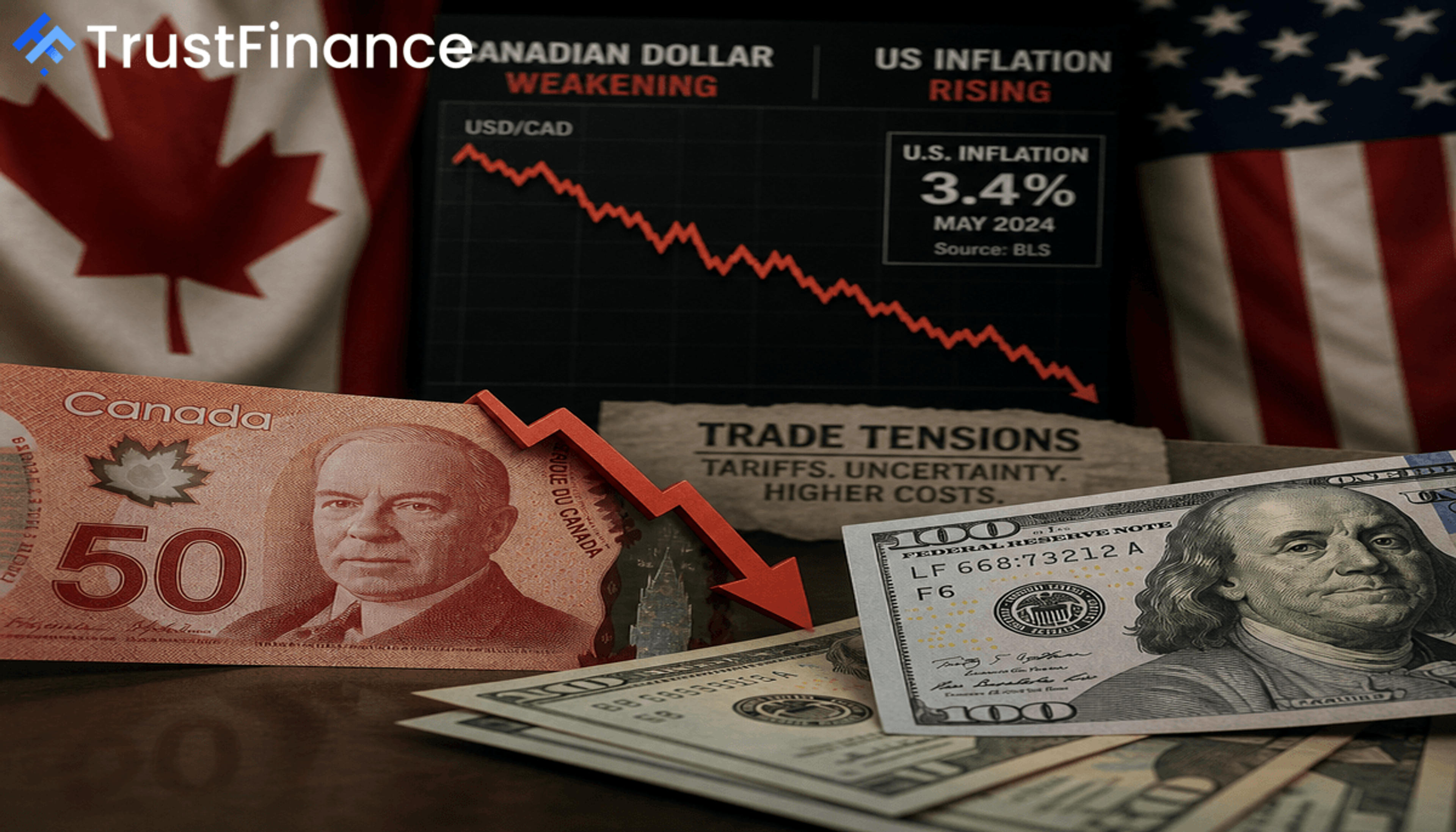
Canadian Dollar Weakens on US Inflation, Trade Tensions

TrustFinance Global Insights
8月 27, 2026
2 min read
0
Key Market Movements
The Canadian dollar weakened against the US dollar on Wednesday, driven by persistent US inflation and escalating trade tensions. The USD/CAD pair rose 0.27% to trade around C$1.3876, with CAD touching C$1.3892 per USD, its lowest since August 19.
Situation Overview
July US inflation data indicated strong price pressures. Overall Personal Consumption Expenditures (PCE) inflation was 3.7% year-over-year, above forecasts, and core PCE at 3.3%. Both rose 0.2% month-over-month, bolstering Federal Reserve rate hike expectations. Concurrently, US-Canada trade disputes escalated following US imposition of a 50% tariff on Canadian goods valued at C$27.6 billion, which equals US$20 billion. Canada responded with reciprocal tariffs.
Economic and Market Impact
This confluence of a hawkish Fed outlook and heightened trade friction significantly pressured the Canadian dollar. A strengthening US dollar, driven by rate hike expectations, typically weighs on commodity-linked currencies, increasing economic uncertainty.
Outlook
The CAD's trajectory remains sensitive to US monetary policy and US-Canada trade relations. Investors will monitor economic data and trade negotiation developments for future market direction.
FAQ
Q: Why did the Canadian dollar weaken recently?
A: The Canadian dollar weakened primarily due to strong US inflation data, supporting Federal Reserve rate hike expectations, and escalating trade tensions between the US and Canada.
Q: What were the key US inflation figures?
A: July's overall PCE inflation was 3.7% year-over-year, and core PCE was 3.3% year-over-year. Both indicators rose 0.2% month-over-month.
Source: Investing.com
Written by
TrustFinance Global Insights
AI-assisted editorial team by TrustFinance curating reliable financial and economic news from verified global sources.
Tags:
Best pick of the Week
Related Articles


